


Fintech apps have become a normal part of everyday life in India. Today, people use mobile apps not only to send money but also to pay bills, invest in stocks, manage expenses, and even apply for loans. Because of this, digital financial services are growing very fast.
If you look around, almost every person with a smartphone is using at least one fintech app. This shows how important these apps have become in daily life. The National Payments Corporation of India has reported billions of UPI transactions every month. This clearly shows that people trust these apps and use them regularly.Because of this growing demand, many businesses are planning to build fintech apps. However, before starting, one important question always comes up: what is the fintech app development cost in India?
What is a Fintech App and Why is It a Game-changer for Businesses?
A fintech app is a digital application that helps users manage their financial activities like payments, banking, investments, and loans. These apps are designed to make financial tasks easy and quick for users.
Earlier, people had to visit banks and spend time in queues for simple tasks like transferring money or checking account details. However, fintech apps have changed this completely. Now, users can do everything in just a few seconds from their mobile phones.
From a business point of view, fintech apps are very powerful. They help companies reach more users without opening physical branches. This not only saves cost but also helps businesses grow faster. In simple words, fintech apps make financial services easier for users and more profitable for businesses.
What is the Market Demand for Fintech Apps?
The demand for fintech apps is increasing every year, and there are clear reasons behind this growth. One of the biggest reasons is the rise in smartphone usage and internet access.
Today, people want fast and simple solutions. They do not want to visit banks or wait for long processes. Fintech apps solve this problem by offering instant services such as quick payments and real-time updates.
At the same time, businesses are also moving towards digital platforms. They want to reduce costs and improve efficiency. Fintech apps help them achieve this by providing a single platform for multiple services.
Because of these reasons, the demand for fintech apps is growing very fast and will continue to grow in the future.
What is the Average Fintech App Development Cost in India?
The fintech app development cost in India usually starts from around ₹5,00,000 and can go up to ₹60,00,000 or even more. The final cost depends on how simple or complex the app is.
To make this easier to understand, you can look at cost based on complexity:
| App Type | Features Level | Estimated Cost | Time Required |
|---|---|---|---|
| Basic App | Simple features | ₹5L – ₹10L | 2–4 months |
| Mid-Level App | Moderate features | ₹10L – ₹25L | 4–8 months |
| Advanced App | Complex features | ₹25L – ₹60L+ | 8–12+ months |
Types of Fintech Apps with Development Time & Cost Estimation
There are different types of fintech apps, and each type has different requirements. Because of this, the cost and development time also change.
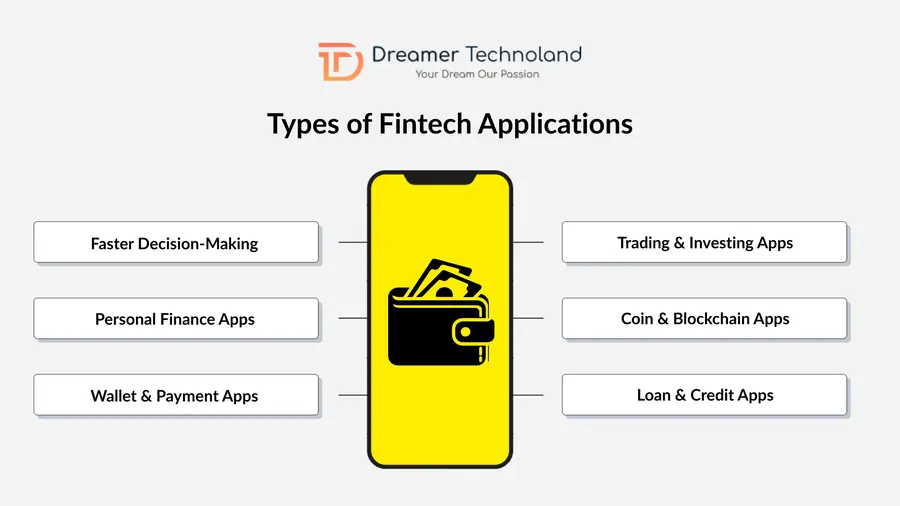
| Fintech App Type | Development Time | Cost (USD) | Cost (INR) |
|---|---|---|---|
| Banking Apps | 6 – 12 months | $50,000 – $150,000 | ₹40 lakh – ₹1.2 crore |
| Personal Finance Apps | 3 – 6 months | $20,000 – $60,000 | ₹16 lakh – ₹50 lakh |
| Wallet & Payment Apps | 4 – 8 months | $30,000 – $100,000 | ₹25 lakh – ₹80 lakh |
| Trading & Investing Apps | 6 – 10 months | $50,000 – $120,000 | ₹40 lakh – ₹1 crore |
| Coin & Blockchain Apps | 6 – 12 months | $60,000 – $150,000 | ₹50 lakh – ₹1.2 crore |
| Loan & Credit Apps | 4 – 9 months | $30,000 – $90,000 | ₹25 lakh – ₹75 lakh |
Common Types of Fintech Applications
- Banking Apps
Banking apps provide services like account-management, fund-transfers, and bill-payments, and they require strong security and deep system-integration with banks. Because of this complexity, they take more time and effort to build. On average, development can take around 6 to 12 months, and the cost usually ranges between $50,000 to $150,000 (₹40 lakh to ₹1.2 crore), depending on features and compliance needs.
- Personal Finance Apps
Personal finance apps help users track expenses, manage budgets, and plan savings in a simple way. These apps are easier to build compared to banking apps but still need good design and proper data-handling for accurate results. Typically, they take about 3 to 6 months to develop, with costs ranging from $20,000 to $60,000 (₹16 lakh to ₹50 lakh).
- Wallet and Payment Apps
Wallet and payment apps allow users to send and receive money instantly, making speed and security very important. Features like real-time transactions and secure authentication increase development effort. These apps usually take 4 to 8 months to build, and the cost can range from $30,000 to $100,000 (₹25 lakh to ₹80 lakh).
- Trading and Investing Apps
Trading and investing apps offer real-time market-data, portfolio-management, and investment options. Because they rely on live data and advanced features, they are more complex and require careful development. Building such apps can take around 6 to 10 months, with costs typically between $50,000 to $120,000 (₹40 lakh to ₹1 crore).
- Coin and Blockchain Apps
Coin and blockchain apps use blockchain-based systems to ensure secure and transparent transactions. These apps require specialized skills and strong backend systems, which increases both time and cost. Development usually takes 6 to 12 months, and costs can range from $60,000 to $150,000 (₹50 lakh to ₹1.2 crore).
- Loan and Credit Apps
Loan and credit apps include features like credit-check, document-verification, and loan-approval processes, which add to the overall complexity. They also need proper data-security and compliance measures. These apps generally take 4 to 9 months to build, with costs ranging from $30,000 to $90,000 (₹25 lakh to ₹75 lakh).
What Factors Affect Fintech App Development Cost?
The cost of development depends on several important factors. Each factor increases the effort required to build the app.
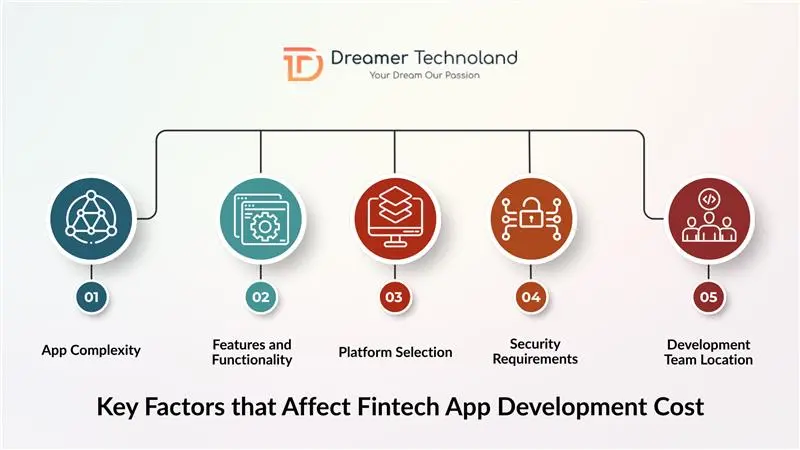
- App Complexity
A simple app requires less time and fewer resources. However, a complex app needs advanced systems and longer development time, which increases cost.
- Features and Functionality
Every feature needs to be designed, developed, and tested. Adding more features increases the total cost.
- Platform Selection
Building for one platform costs less. However, developing for both Android and iOS increases the budget.
- Security Requirements
Fintech apps must protect user data. Strong security systems increase development effort and cost.
- Development Team Location
Developer cost varies by region. India is more affordable compared to the US and Europe.
What Are the Location-wise Hourly Rates of Fintech Developers?
The cost of developers depends on their location. Different regions have different pricing.
| Region | Hourly Rate |
|---|---|
| India | $20 – $50 |
| Europe | $50 – $120 |
| USA | $80 – $150 |
India is often preferred because it offers good quality at lower cost.
How Does the Fintech App Development Cost Breakdown Work?
The fintech app development cost breakdown is divided into different stages. Each stage adds to the total cost.
| Stage | Work | Cost Share |
|---|---|---|
| Planning | Idea and research | 10% |
| Design | UI/UX | 15% |
| Development | Coding | 40% |
| Testing | QA | 15% |
| Deployment | Launch | 20% |
Each stage is important because it ensures that the app is built properly and works smoothly.
What Technologies and Features Are Used in Fintech Apps?
Technology and features play a very important role in how well a fintech app performs. A strong technology base helps the app run smoothly, while the right features make it useful and easy for users.
In simple words, good technology makes the app fast and secure, and good features make users want to keep using it.
Technologies Used in Fintech App Development
Different parts of the app use different technologies. Each layer has its own role in making the app work properly.
| Layer | Technologies |
|---|---|
| Frontend | React, Angular |
| Backend | Node.js, Python |
| Database | MongoDB, PostgreSQL |
| Cloud | AWS, Google Cloud |
Features Integrated in Fintech Apps
Features are what make the app useful for users. They are usually divided into two types: core features and advanced features.
- Core Features
Essential functions like user login, account management, and transaction history let users securely access and manage their finances. These must be reliable and thoroughly tested for the app to work properly.
- Advanced Features
Enhancements like AI-based insights and fraud detection improve user experience and security. While not required initially, they become important as the app scales and user expectations grow.
What Are Real-world Examples of Fintech Apps?
Real-world examples help us understand how fintech apps grow and succeed over time. Most successful apps start with simple features and then improve step by step based on user needs.
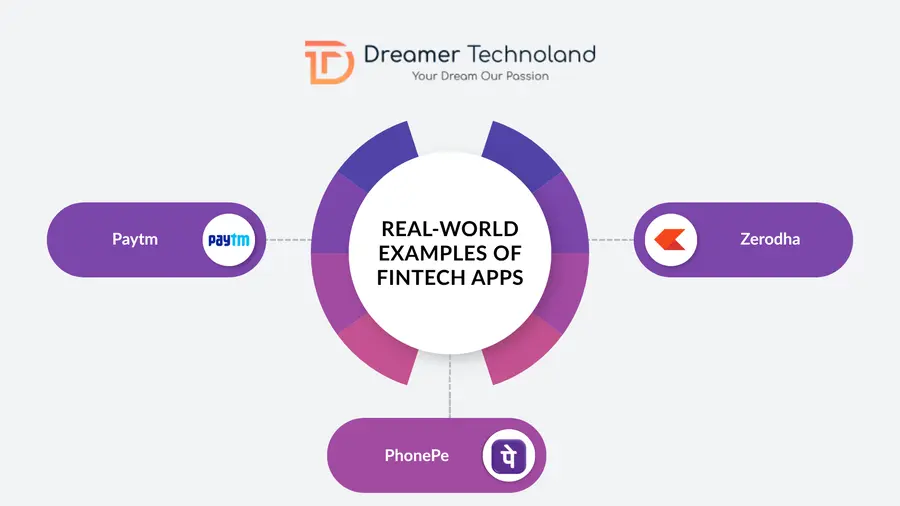
- Paytm
Paytm started as a wallet app for recharges and bill payments. Later, it added services like UPI, banking, and investments. This shows that starting simple and growing gradually is a smart approach.
- Zerodha
Zerodha made stock trading simple and affordable for users. It focused on easy design and low cost, which helped it attract many beginners and grow quickly.
- PhonePe
PhonePe focused on fast and easy UPI payments. Over time, it added services like bill payments and insurance, which helped increase user engagement.
What Challenges Are Involved in Fintech App Development?
Fintech app development comes with several challenges because it deals with money and user data. These challenges must be handled carefully.
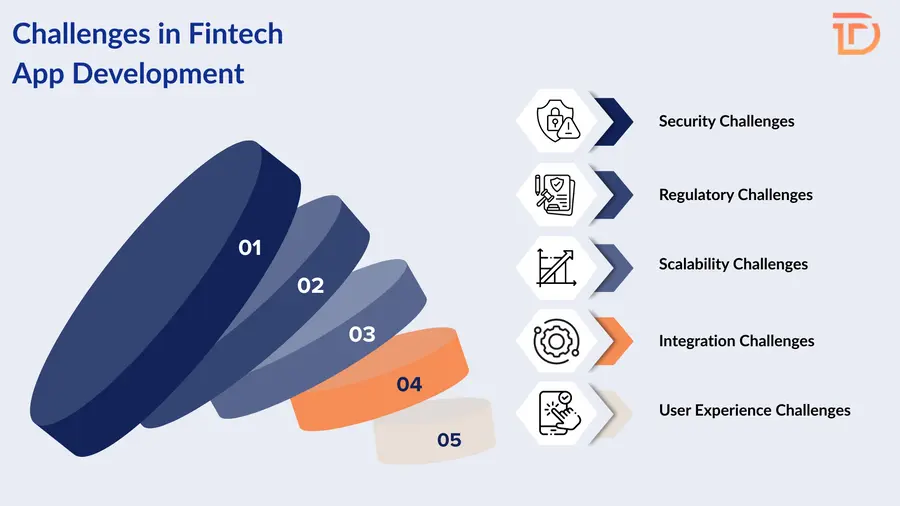
- Security Challenges: Fintech apps handle sensitive data, so strong security is required to protect users and prevent fraud.
- Regulatory Challenges: These apps must follow government rules and financial regulations, which can make development more complex.
- Scalability Challenges: As users increase, the app must handle more traffic without slowing down or crashing.
- Integration Challenges: Fintech apps need to connect with banks and payment systems, which requires proper setup and testing.
- User Experience Challenges: The app must be simple and easy to use. If it is confusing or slow, users may stop using it.
Why is India a Hub for Fintech App Development?
India is a popular choice because it offers skilled developers at lower cost. Businesses can save money without compromising on quality. India also has a strong IT industry and experience in building large applications. This makes it a preferred destination for fintech development.
To explain further in simple terms:
- The Digital Highway: The Indian government built a “digital highway” called UPI and Aadhaar. This makes it very easy for any app to verify who a user is or move money instantly. It’s like having the best roads already built so companies only have to build the cars (the apps).
- A Huge Audience: India has over 1 billion mobile phone users. Because so many people use smartphones and cheap data, there is a massive “playground” for these apps to test new ideas and grow fast.
- Government Support: The government encourages people to use digital money instead of cash. They also make rules that keep your money safe, which makes people trust these apps more.
- Smart and Young Workforce: India has the largest number of young engineers in the world. These developers aren’t just good at coding; they are experts at using Artificial Intelligence (AI) to make apps that can talk to users and solve problems automatically.
- A Global Leader: Because India’s systems (like UPI) are so good, other countries are now trying to copy them. This makes India the “headquarters” for learning how to build the future of money.
How Can You Optimize Fintech App Development Cost?
You can reduce the cost of building a fintech app by following a simple and smart approach. First, start with an MVP, which means a basic version of your app with only important features, so you can test your idea without spending too much money. Next, use cross-platform tools, as they help you build the app for both Android and iOS at the same time, which saves time and cost. It is also important to choose the right development team, because an experienced team can guide you properly and help avoid mistakes. Finally, focus only on the most important features at the beginning, and add more features later as your app grows.
How Can Dreamer Technoland Help You Build a Fintech App Easily?
Building a fintech app can feel confusing, especially when you are not sure where to start or which features to add first. This is where Dreamer Technoland, a trusted fintech app development agency, can make things easier in a simple and step-by-step way.
They help you focus on the right core features first and then guide you in adding advanced features as your app grows. Their clear and practical approach helps you avoid common mistakes and build a user-friendly, secure, and reliable app that people can trust.
FAQs
Q. How to build a fintech app?
A. Start with planning, define features, and work with a development team.
Q. What is the average cost of app development in India?
A. It starts from ₹5,00,000 and increases based on complexity.
Q. How much does it cost to build an app likeZepto?
A. It can range from ₹20,00,000 to ₹80,00,000.
Q. How much does it cost to build an app like Amazon in India?
A. It can cost ₹50,00,000 to ₹1,00,00,000 or more.
Q. How to build an MVP app?
A. Start small, test, and improve step by step.