
Launching a new mobile application can be exciting, but it also comes with many risks. Startups often spend a lot of time and money building full products before understanding whether users actually need them. Because of this challenge, many startups now prefer to build an MVP app before investing in a full-scale product.
A Minimum Viable Product (MVP) allows businesses to launch a basic version of their app with only the most important features. According to CB Insights, nearly 35% of startups fail because there is no real market need for their product. This is one of the main reasons why MVP development has become a popular strategy. By launching a simple version first, startups can test their idea, collect user feedback, and improve the product step by step.
What Is an MVP ?
A Minimum Viable Product(MVP) is the first and simplest version of a product that still provides value to users. The goal is not to create a perfect application. Instead, the goal is to create something simple that people can start using.
In easy terms, what is an MVP? It is a basic product that allows startups to test their idea in real conditions. Even though the product is simple, it must still solve a real problem for users.
For example, many successful companies started with simple MVPs. When Dropbox started, the company did not build the full product immediately. Instead, the founders created a short video showing how the product would work. This video helped them understand whether people were interested in the idea.
Similarly, the early version of Airbnb allowed people to rent space in their homes with very limited features. Over time, the company added more features as more users joined the platform.
These examples show that an MVP does not need to be complex. What matters is solving a real problem and learning from users.
Why Startups Prefer to Build an MVP App?
Startups usually work with limited money and small teams. Because of this, building a complete application from the beginning can be very risky. If the idea fails, the company may lose a large amount of money.
An MVP helps startups test their idea quickly. Instead of spending months or even years building a full product, they can launch a basic version in a shorter time.
In addition, MVP development reduces financial risk. Since only the core features are developed at the beginning, the development cost remains lower.
Another important benefit is early user feedback. When people start using the MVP, they naturally share their opinions. They may suggest improvements or request new features. This feedback helps startups understand what users really want.
Key Benefits of MVP Development
The benefits of MVP development are one of the main reasons why startups use this strategy. Even though an MVP is simple, it still provides many important advantages.
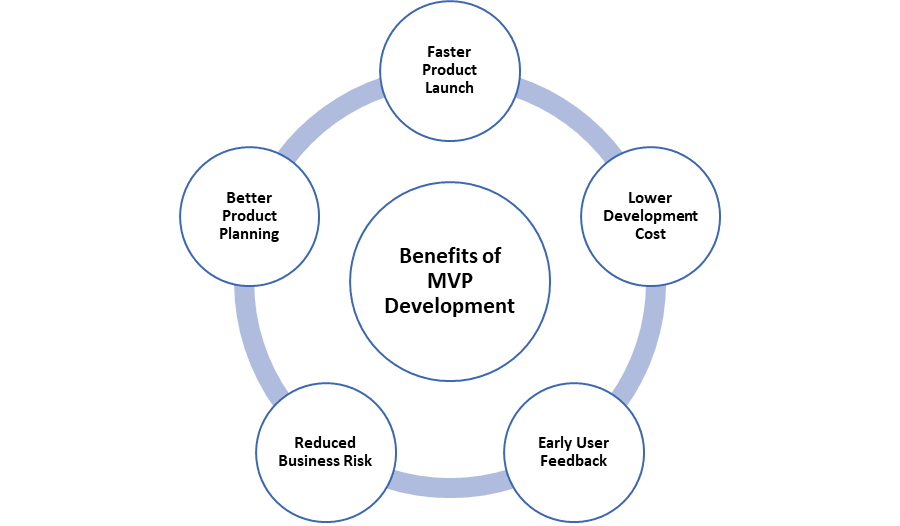
- Faster Product Launch: An MVP helps startups launch their product quickly. Since only the most important features are developed, the product can reach the market much faster.
- Lower Development Cost: Building a full application with many features can be very expensive. However, MVP development focuses only on essential features, which helps reduce development costs.
- Early User Feedback: Once the MVP is released, real users start interacting with the product. Their feedback helps businesses understand what works well and what needs improvement.
- Reduced Business Risk: Instead of investing large amounts of money in a full product, startups test their idea first. If the idea does not work, they can make changes without losing too many resources.
- Better Product Planning: User feedback helps founders decide which features should be added later. This makes future development more focused and effective.
Step-by-Step MVP Development
Building a Minimum Viable Product requires a clear process. Although every startup may follow a slightly different approach, most projects follow a similar step-by-step MVP development process.
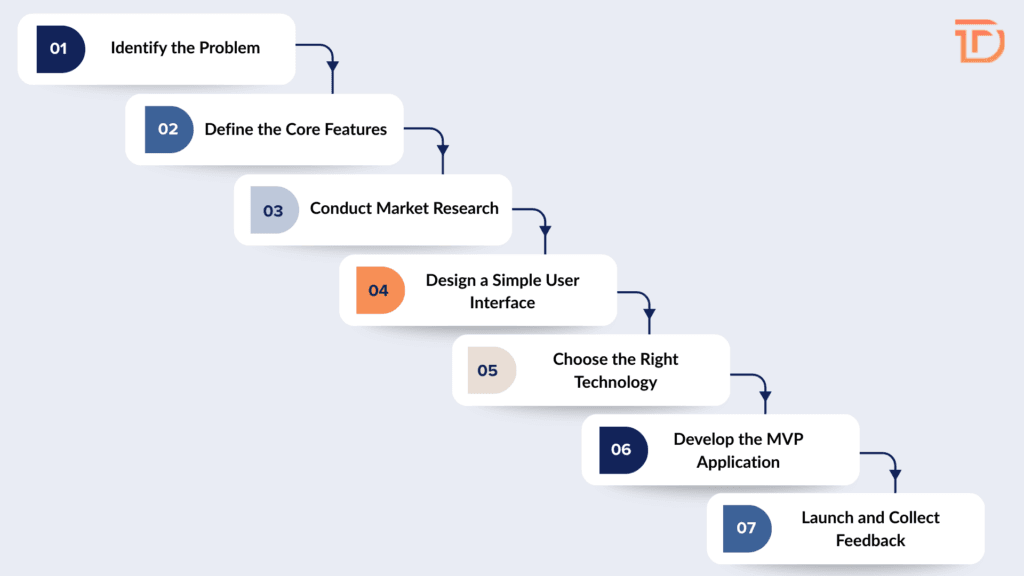
- Identifythe Problem: The first step is understanding the problem the app will solve. A successful product always solves a real problem for users.
- Define the Core Features: Next, startups must decide which features are absolutely necessary. Only the most important features should be included in the MVP.
- Conduct Market Research: After defining the idea, businesses should study their target audience. Market research helps startups understand user needs and expectations.
- Design a Simple User Interface: Even though the product is basic, the design should still be simple and easy to use. A complicated interface can confuse users.
- Choose the Right Technology: Technology is an important part of MVP development. Many startups choose cross-platform development so their application can work on both Android and iOS devices.
- Develop the MVP Application: Once the planning and design are complete, developers start building the product. Technologies like React Native Mobile App Development are often used because they allow faster development.
- Launch and Collect Feedback: After development and testing, the MVP is launched for early users. Their feedback helps businesses improve the product and add new features later.
Technologies Used to Build an MVP App
Choosing the right technology can make MVP development faster and easier. Startups often choose technologies that allow quick development and future scalability.
One popular approach is cross-platform development. This method allows developers to build one application that works on both Android and iOS devices. As a result, startups save both time and development cost.
Another popular technology is React Native which allows developers to build mobile apps using a single codebase while still delivering good performance.
Because of these advantages, many startups use these technologies when they build their first MVP.
Mistakes to Avoid While Building an MVP
Although MVP development is a smart strategy, startups sometimes make mistakes during the process. Understanding the mistakes to avoid while building an MVP can help improve the chances of success.
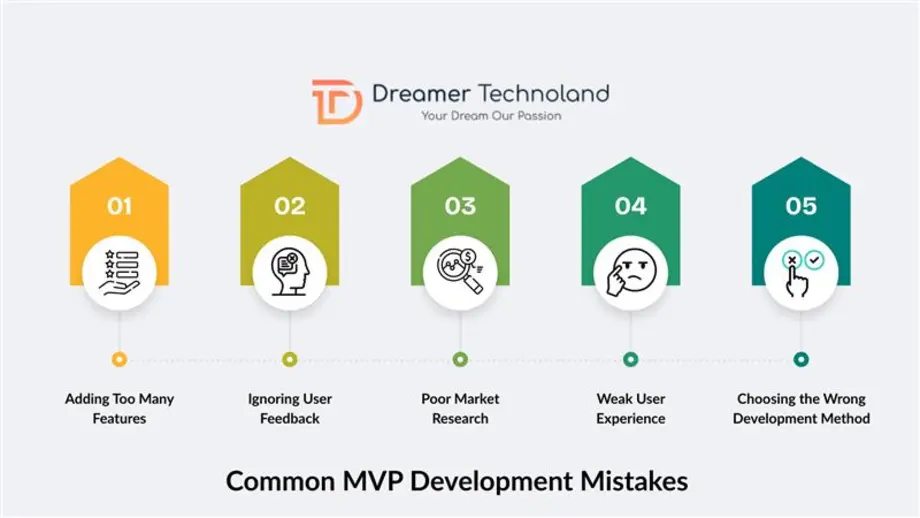
- Adding Too Many Features: An MVP should stay simple. Adding too many features increases development time and makes the product more complicated.
- Ignoring User Feedback: User feedback is extremely valuable. Ignoring feedback can prevent the product from improving.
- Poor Market Research: Without understanding the target audience, startups may build products that people do not need.
- Weak User Experience: Even a simple product should be easy to use. A poor user experience may cause users to stop using the app.
- Choosing the Wrong Development Method: Using outdated technology or inefficient development practices can slow down product growth.
How Much Does It Cost to Build an MVP App?
The cost of building an MVP app depends on several factors. These include app complexity, features, technology stack, and development team.
Below is a general estimate of MVP development costs.
| MVP Type | Estimated Cost | Development Time |
|---|---|---|
| Basic MVP Application | $10,000 – $25,000 | 1 – 2 months |
| Moderate MVP Product | $25,000 – $60,000 | 2 – 4 months |
| Advanced MVP with Integrations | $60,000 – $120,000 | 4 – 6 months |
Most startups begin with a small MVP and improve the product later. This approach helps keep development costs under control.
Conclusion
Building a Minimum Viable Product is one of the smartest ways for startups to test their ideas. When businesses build an MVP app, they focus on solving the most important problem first while keeping development simple and affordable. The benefits of MVP development include faster product launches, reduced risk, and valuable feedback from real users. By following a clear step-by-step MVP development process, startups can turn their ideas into real digital products with the support of technology partners offering custom product development services, such as Dreamer Technoland, who help design and launch MVP apps that are flexible, reliable, and ready for future growth.
FAQs
Q. What is an MVP in app development?
A. A Minimum Viable Product is a basic version of an application that includes only the essential features needed to test a product idea.
Q. Why should startups build an MVP app?
A. Startups build MVP apps to test their idea quickly, collect user feedback, and reduce development risks.
Q. How long does it take to build an MVP app?
A. Most MVP applications can be developed within two to four months depending on complexity.
Q. Which technology is best for MVP development?
A. Technologies such as cross-platform frameworks like React Native, Flutter are commonly used because they enable faster development.
Q. Is MVP development suitable for all startups?
A. Yes. MVP development helps startups validate their idea before investing heavily in a full product.