
If you are planning to build an app, the first thing you need to do is Define Your App Idea, then move to Market Research & Competitor Analysis, and understand the complete Mobile App Development Process before writing any code.Many people think building an app is only about coding, but in reality, it is about solving a problem in a simple and useful way. When you follow the right steps, the process becomes much easier and more structured.
Mobile apps have become a major part of everyday life. According to Gartner mobile applications continue to drive digital engagement across industries in 2026, which clearly shows why businesses are investing heavily in them. This growing demand also means more competition, so building the right app in the right way is very important.Let’s understand the complete process step by step in a simple and practical way.
What Does It Really Mean to Define Your App Idea?
Before you do anything else, you need to clearly Define Your App Idea. This is not just about saying “I want to build an app,” but about understanding what your app will actually do and who it will help.
A strong app idea always solves a real problem. It should make something easier, faster, or better for the user. When your idea is clear, it becomes much easier to plan features and make decisions later.
For example, if you are building a fitness app, you need to decide what makes it useful. Will it track workouts, provide diet plans, or offer personal coaching? The more clearly you define your idea, the more focused your development process will be.
At this stage, it also helps to think about your target users. Are you building for students, professionals, or businesses? Understanding your audience will guide your design and features.
Why Is Market Research & Competitor Analysis So Important?
Once your idea is ready, the next step is Market Research & Competitor Analysis. This step helps you understand what already exists and how your app can stand out.
You should start by exploring similar apps in your category. Download them, use them, and observe their features, design, and user experience. This gives you a clear idea of what users expect.
Important Areas to Focus on:
- Competitor Features and Functionality
Look at what features are commonly used in successful apps. This helps you understand the standard expectations in your category and what users find valuable.
- User Reviews and Feedback
Reviews often reveal real user problems. If users are complaining about slow performance or missing features, you can use this information to improve your app.
- Market Demand and Trends
In 2026, trends like AI-based apps, automation, and personalization are becoming more popular. Understanding these trends helps you build a more future-ready product.
This step reduces risk and helps you create something that users actually need.
How Do You Choose the Right App Type?
After research, you need to Choose the App Type, which directly affects performance, user experience, and the cost of building a mobile app.
| App Type | What It Means | Best For | Cost Level |
|---|---|---|---|
| Native App | Built for a specific platform like Android or iOS, offering strong performance and smooth experience | High-performance apps | High |
| Hybrid App | One app works across multiple platforms using a single codebase | Faster and cost-effective development | Medium |
| Web App | Runs in a browser without installation, suitable for simple use cases | Basic tools | Low |
If your goal is performance and quality, native apps are a strong choice. However, if you want to save time and cost, hybrid apps are often more practical.
How Should You Plan Features & Create MVP?
At this point, you should Plan Features & Create MVP instead of trying to build everything at once.
An MVP, or Minimum Viable Product, is a simple version of your app that includes only the most important features. It allows you to test your idea in the real market without spending too much money.
- Focus on the Core Purpose of your App
Identify the main problem your app solves and include only those features that are necessary to deliver that solution. This keeps development simple and efficient.
- Avoid Adding extra Features in the Beginning
Many founders try to add too many features at once, which increases cost and delays launch. It is better to start simple and improve later.
- Use Feedback to Improve your App
Once your MVP is launched, you can collect real user feedback and make improvements based on actual needs.
For example, if you are building a delivery app, your MVP may only include order placement and tracking. Advanced features can be added later.
Why Are Wireframes and UI/UX Design Important?
Before development starts, you should Create Wireframes & UI/UX Design to plan how your app will look and work.
Wireframes act like a blueprint. They show the structure of your app, including screens, buttons, and navigation flow. This helps you avoid confusion during development.
UI/UX design focuses on user experience. A well-designed app feels simple and easy to use, while a poorly designed app can frustrate users even if it works perfectly.
Key design elements to focus on:
- Clear Navigation and Structure
Users should be able to move through your app easily without confusion. A simple structure improves usability and keeps users engaged.
- Consistent Design Style
Using the same colors, fonts, and layouts creates a professional look and builds trust with users.
- Fast and responsive interactions
The app should respond quickly to user actions. Slow or unresponsive apps often lose users quickly.
Good design is not just about appearance. It directly affects how users feel when they use your app.
How Do You Choose Technology Stack?
Next, you need to Choose latest AI technology stack, which includes the tools and technologies used to build your app.
| Component | Purpose | Examples |
|---|---|---|
| Frontend | What users see and interact with | Flutter, React Native |
| Backend | Handles logic and data processing | Node.js, Python |
| Database | Stores and manages data | MongoDB, PostgreSQL |
Choosing the right stack ensures your app runs smoothly and can handle growth in the future. A poor choice can lead to performance issues and higher costs later.
If you are not sure which technologies to use, working with a custom mobile app development company can help you make the right decision.
What Is the Mobile App Development Process?
The Mobile App Development Process follows a structured path that ensures everything is built properly.
Main Stages Explained:
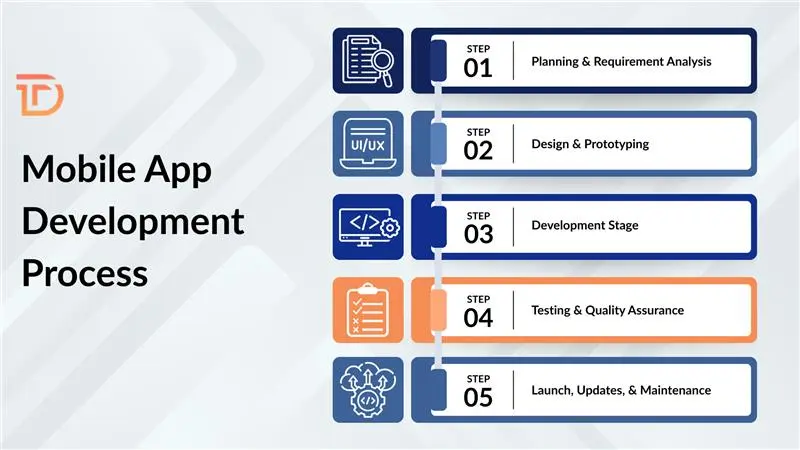
- Planning and Requirement Analysis
In this stage, your idea is converted into clear requirements. This helps developers understand what needs to be built.
- Design and Prototyping
Wireframes and UI designs are created to visualize the app before development begins.
- Development Stage
Developers build the frontend and backend, ensuring all features work correctly.
- Testing and Quality Assurance
The app is tested to identify bugs and improve performance before launch.
- Launch, Updates, and Maintenance
After launch, the app is continuously improved based on user feedback. This includes fixing bugs, adding features, and improving performance.
Many people forget that development does not end after launch. In reality, post-launch updates are essential for long-term success.
What Are the Most Common Mistakes to Avoid?
Even a good app idea can fail if common mistakes are not avoided. Understanding these mistakes helps you build a better product.
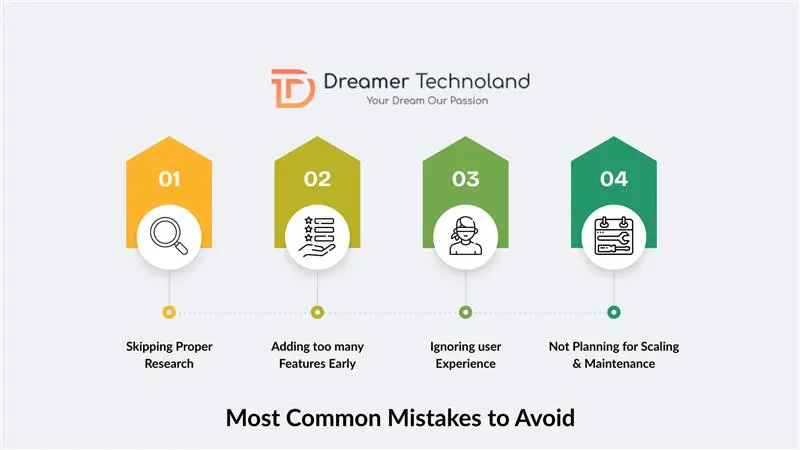
- Skipping Proper Research
Without research, you may build something that users do not need, which leads to wasted time and money.
- Adding too many Features Early
Trying to build everything at once increases complexity and delays your launch.
- Ignoring User Experience
If your app is difficult to use, users will quickly stop using it.
- Not Planning for Scaling and Maintenance
As your app grows, it needs to handle more users and data. Without proper planning, this can lead to high costs later.
Avoiding these mistakes increases your chances of success.
How Much Does It Cost of Building a Mobile App?
The cost of building a mobile app depends on features, design, and development complexity.
| App Type | Cost Range |
|---|---|
| Basic App | $10,000 – $30,000 |
| Medium App | $30,000 – $80,000 |
| Advanced App | $80,000 – $150,000+ |
However, there are also hidden costs that many people do not consider. These include app store fees, maintenance, server costs, and updates over time. Understanding these costs helps you plan your budget more effectively.
How Can Dreamer Technoland Support Your Mobile App Development Journey?
By now, you understand that building a mobile app is not just about development. It involves planning, choosing the right features, selecting the right technology, and making sure everything works smoothly together.
This is where having the right development partner can make the process much easier and more efficient. A team like Dreamer Technoland focuses on understanding your idea first, instead of directly jumping into development.
Read also >> How to Choose a Mobile App Development Company?
They help you shape your concept into a clear plan, decide the right app type, and guide you through each stage of the Mobile App Development Process. This ensures that your app is not only built correctly but also aligned with your business goals.
Another important advantage is their focus on practical execution. From creating wireframes to selecting the right technology stack, every step is planned carefully to avoid common mistakes and reduce unnecessary costs.
With experience in building scalable mobile apps, Dreamer Technoland supports businesses in turning their ideas into real, working products that perform well in the market.
Final Thoughts
Building a mobile app from scratch may seem difficult at first, but when you follow a clear step-by-step approach, it becomes much easier.Start by defining your idea, understand your users, and focus on building a simple but useful product. As your app grows, you can improve and expand it based on real feedback.With the right planning and approach, you can build an app that is not only functional but also successful in the long run.
FAQs
Q. How long does it take to build an app?
A. It usually takes between 3 to 9 months depending on complexity and features.
Q. Can I build an app without coding?
A. Yes, you can work with developers or use tools, but understanding basics is helpful.
A. Can I update my app after launch?
A. Yes, apps require continuous updates to improve performance and add features.