

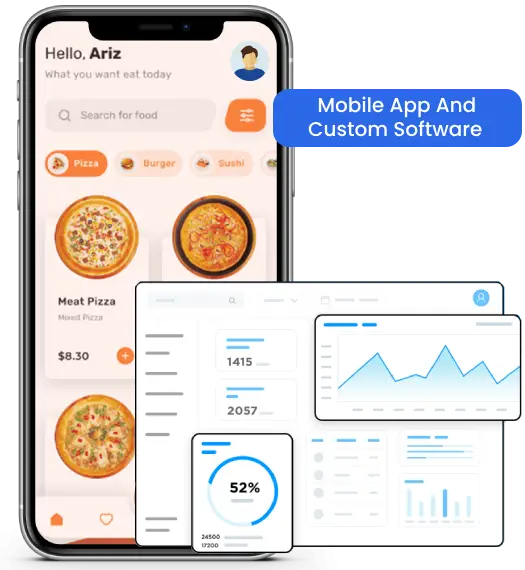
In today’s fast-moving digital world, businesses are under pressure to deliver high-quality mobile apps quickly and cost-effectively. If you are planning to launch a mobile solution, choosing the right framework can make a huge difference. Among the many options available today, Flutter and React Native have emerged as the front-runners in the cross-platform frameworks. These frameworks enable developers to build apps that run smoothly on both Android and iOS from a single codebase.
In this article, we will explore why Flutter and React Native lead the cross-platform framework market, their benefits, challenges, and how you can choose the right framework for your project. Along the way, we will discuss trends that are shaping modern app development and how businesses can leverage these technologies.
Top 10 Cross-Platform Frameworks
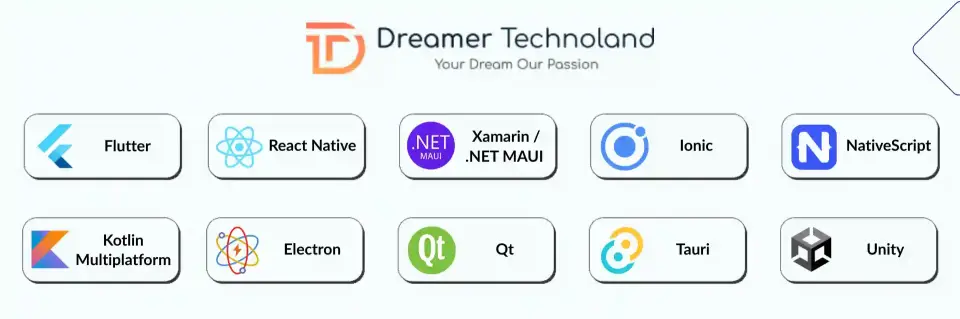
- Flutter
- React Native
- Xamarin / .NET MAUI
- Ionic
- NativeScript
- Kotlin Multiplatform
- Electron
- Qt
- Tauri
- Unity
How Cross-Platform Frameworks Typically Used
| Framework | Best For | Platforms |
|---|---|---|
| Flutter | Rich UIs, enterprise & consumer apps | iOS/Android/Web/Desktop |
| React Native | Apps with existing web/JS teams | iOS/Android (+ some web) |
| Xamarin/.NET MAUI | .NET ecosystem apps | iOS/Android/Desktop |
| Ionic | Web-centric mobile apps | Mobile/Web |
| NativeScript | Native UI via JS/TS | iOS/Android |
| Kotlin Multiplatform | Shared business logic | iOS/Android/Desktop |
| Electron | Desktop apps with web skills | Windows/macOS/Linux |
| Qt | High-performance native apps | Multi-device |
| Tauri | Secure, lightweight desktop apps | Windows/macOS/Linux |
| Unity | Games/interactive experiences | Many platforms |
Why Flutter and React Native Lead the Cross-Platform Framework Market
When it comes to building mobile apps that work across multiple platforms, Flutter and React Native have consistently topped the charts. According to developer surveys and industry trends, Flutter’s adoption continues to grow rapidly, and React Native still commands a large share of the developer community. In fact, Flutter now holds around 46% of the cross-platform development market in some developer surveys, slightly ahead of React Native, while both together dominate more than half of all mobile apps built with cross-platform technologies.
Flutter
Flutter is a UI toolkit developed by Google, which uses the Dart programming language. It draws every pixel on the screen with its own rendering engine, which ensures consistent performance and design across platforms. This makes it ideal for businesses that want pixel-perfect interfaces and a smooth user experience.
React Native
React Native, created by Meta (formerly Facebook), uses JavaScript and React concepts to build apps. It renders native UI components, making apps feel close to true native performance. Because JavaScript is already familiar to millions of developers, React Native has an extensive ecosystem and talent pool.
While other frameworks like Xamarin and Kotlin Multiplatform also exist, Flutter and React Native have the broadest community support, tooling ecosystems, and adoption in production environments.
Benefits of Using Multi-Platform Frameworks
Whether it is an ecommerce app solution, fitness app or app for any other industry, mobile application built with cross-platform technologies offers many tangible benefits.
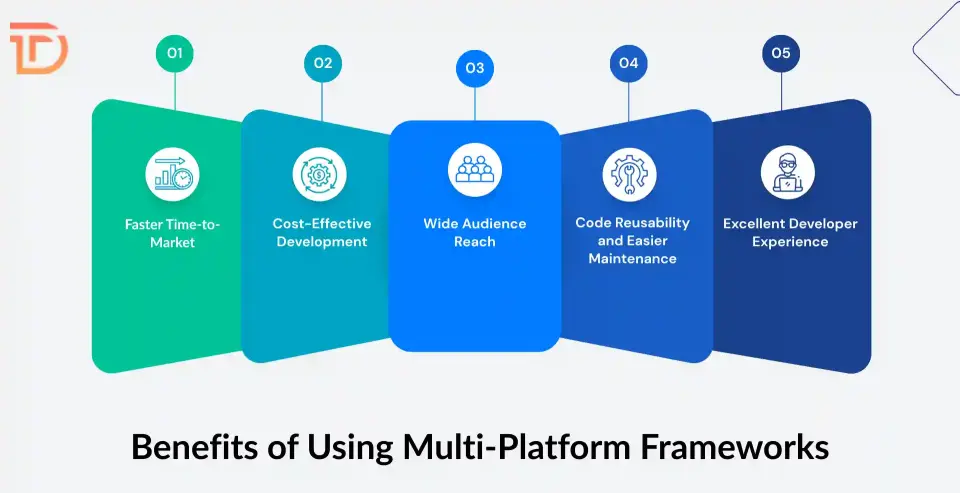
Faster Time-to-Market
With cross-platform frameworks, developers write one codebase that works across Android and iOS. This significantly reduces development time compared to building separate native apps. A unified codebase enables features to be tested and deployed simultaneously, which speeds up the launch process.
Cost-Effective Development
Using one shared codebase reduces the resources needed to build apps for multiple platforms. Businesses often see a dramatic reduction in development and maintenance costs compared to separate native app development projects.
Wide Audience Reach
Releasing apps on both major platforms with minimal additional effort means you can reach a broader audience. Whether customers are on Android or iOS, businesses do not have to delay releases for one platform over the other.
Code Reusability and Easier Maintenance
A shared codebase makes it easier to apply updates, bug fixes, and new features across all platforms at once. Instead of fixing issues separately in different native projects, teams can work from a single codebase to ensure consistency and reduce technical debt.
Excellent Developer Experience
Both Flutter and React Native have powerful “hot reload” features that let developers see changes instantly during development. This dramatically improves productivity and allows for quick iterations.
Because of these benefits, businesses from startups to enterprises leverage customized cross platform mobile app strategies to accelerate growth and stay competitive in rapidly evolving markets.
How to Choose the Right Framework
Selecting between Flutter and React Native depends on many factors that align with your project requirements, team expertise, and long-term goals.
Consider Your Design and Performance Needs
If your project demands highly custom UI with consistent design across all devices, Flutter’s widget-based rendering engine gives you pixel-perfect control. For apps with complex animations or graphics-intensive features, Flutter’s performance advantages can be compelling.
On the other hand, if your team already has strong JavaScript experience and you want to reuse web development skills, react native development services might be a natural fit. React Native uses native components, which can deliver a more platform-specific look and feel.
Evaluate Ecosystem and Community Support
React Native benefits from a large ecosystem of libraries and tools because it builds on JavaScript and the wider React ecosystem. This makes finding solutions for edge cases easier and speeds up integration with existing technologies.
Flutter, while younger, is growing fast and gaining broader toolkit support. Both frameworks are backed by major tech companies, so ongoing enhancements and strong documentation make them stable choices for future-proofing your project.
Budget and Resource Allocation
Although both frameworks reduce the overall project costs, you should also consider long-term support, developer availability, and platform updates. Outsourcing custom flutter app development or React Native work to experienced teams often lowers risk and ensures your product benefits from best practices.
You will also want to factor in secondary considerations such as cross-platform development cost, cost to develop a flutter app, and react native app development cost when planning your project budget.
Identify Your Business’s Tech Strategy
Think about how your mobile app fits into your overall digital business technology platform. If mobile is core to your strategy or connects to e-commerce systems, APIs, or web portals, your framework choice should support seamless integration with backend services and other digital tools.
Challenges in Cross-Platform Development
While Flutter and React Native deliver many benefits, cross-platform app development still comes with challenges that businesses should be aware of.
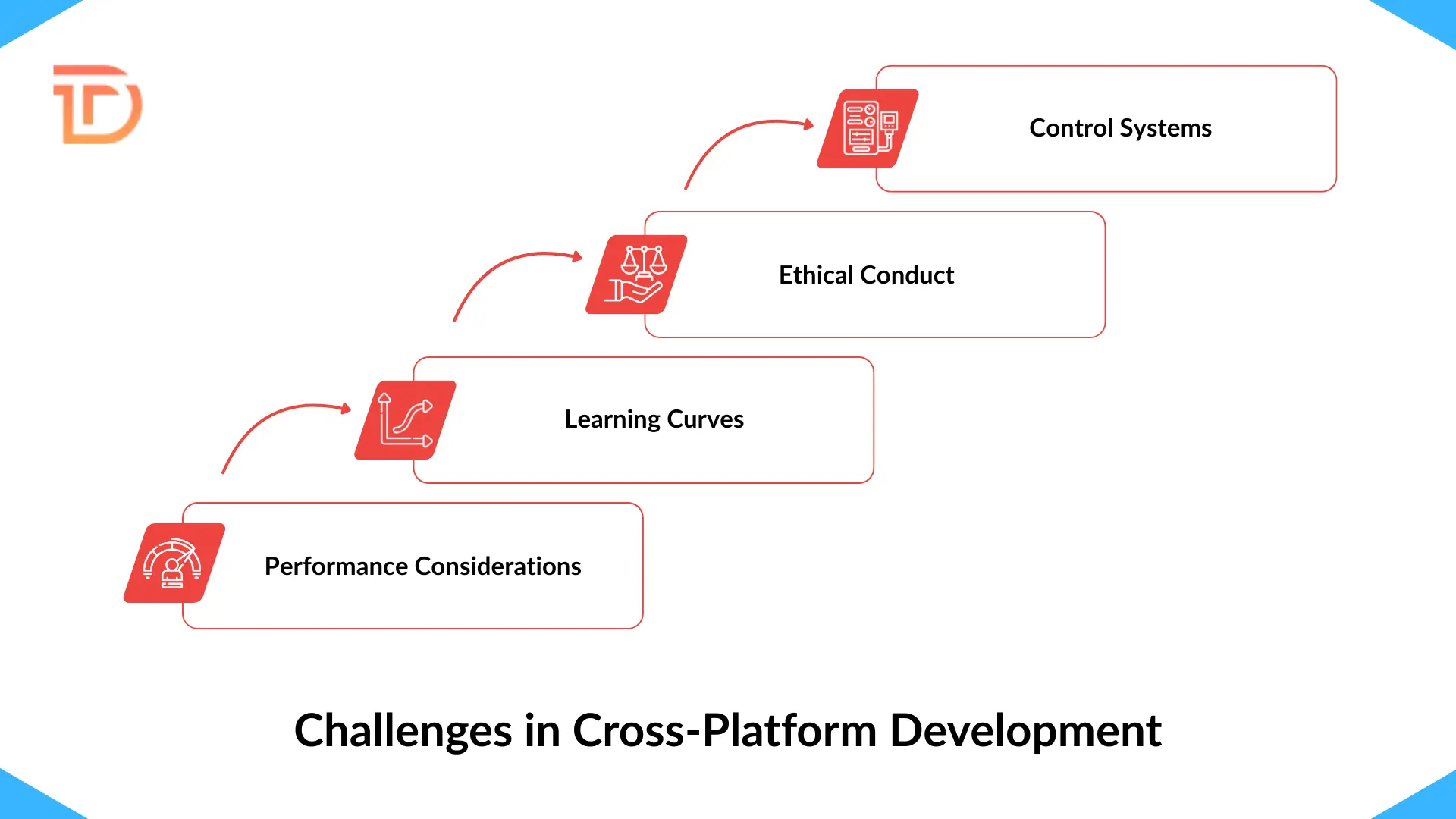
Performance Considerations
Although both frameworks are capable, there are trade-offs. React Native uses a JavaScript bridge for native interactions, which can introduce overhead for complex animations or high-performance scenarios. Flutter compiles directly to native machine code, often yielding smoother performance, but some highly optimized native libraries might still outperform cross-platform code.
Learning Curves
Flutter requires knowledge of Dart, which may be unfamiliar to many developers. Teams switching to Dart must often spend time learning new language features and development patterns. React Native uses JavaScript, which lowers the learning curve for many but still requires understanding mobile-specific details.
Dependency and Library Limitations
Both frameworks depend on third-party libraries for certain advanced features. Although ecosystems are growing, there are still cases where you must write native modules or custom integrations for device-specific features such as advanced Bluetooth controls or platform-specific UI behaviors.
Platform-Specific Features
Not every native feature or API is accessible directly through cross-platform tools. Sometimes, developers must implement native code or plugins to handle unique device capabilities. This can introduce complexity and reduce code reusability.
Despite these challenges, many teams choose cross-platform development because the benefits outweigh the downsides, especially for projects where time, cost, and consistency are key priorities.
Conclusion
Flutter and React Native continue to lead the cross-platform framework market for compelling reasons: faster development, lower cost, wide audience reach, and robust ecosystems. Whether you are building your first MVP or scaling your digital services, both frameworks offer excellent paths to achieving your mobile app goals.
At Dreamer Technoland, we specialize in delivering tailored mobile app solutions, from custom flutter app development to comprehensive react native development services. Our experience in cross-platform app development means you get powerful, efficient, and user-friendly mobile applications built to meet your business goals.