

If you ask ten different people how long it takes to build an app, you will probably get ten different answers. Some will say a few weeks, while others will say several months. This confusion is very common, especially for businesses that are planning their first digital product. The truth is, app development is not just about coding. It is a step-by-step process that depends on many factors like idea clarity, features, team experience, and even decision-making speed.
In 2026, this has become even more important. Businesses are moving faster, users expect better experiences, and competition is higher than ever. According to a report by Gartner, more than 65% of software projects face delays due to unclear requirements or changing scope, which shows that time planning is just as important as development itself.So instead of guessing timelines, let’s break everything down in a clear and practical way.
What Are the Key Factors That Affect App Development Time in 2026?
Before jumping into timelines, it helps to understand what actually controls them. The Key Factors That Affect App Development Time are not just technical details, they reflect how well a project is planned and executed in real life.
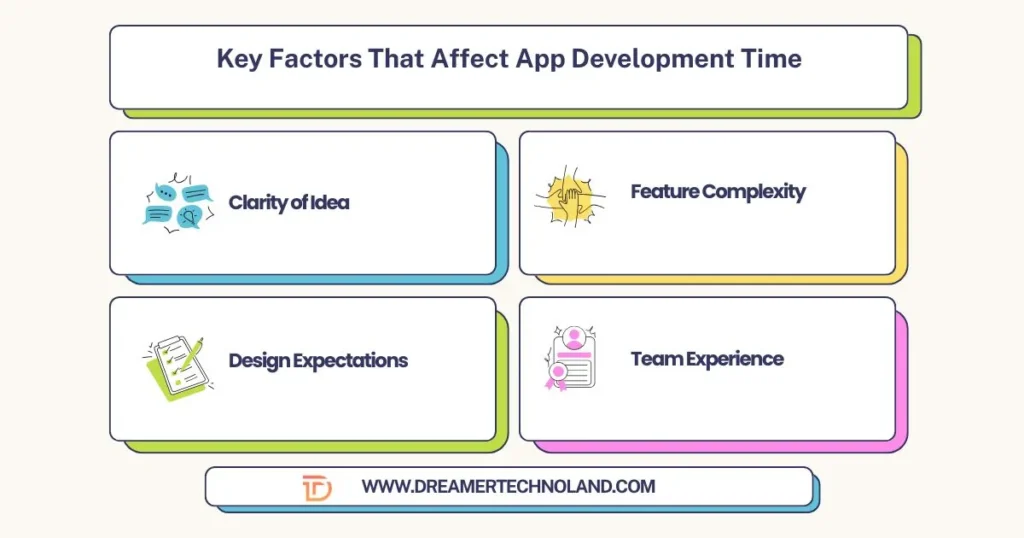
- Clarity of Idea
In real projects, delays often begin before development even starts. When businesses clearly define what they want and make quick decisions, the team can move forward without confusion.
However, when ideas keep changing or stakeholders are unsure, developers are forced to pause, rethink, and redo parts of the work. This is where weeks or even months get lost.
- Feature Complexity
At first, most apps seem simple. But once you start listing features like user roles, dashboards, notifications, and integrations, complexity increases quickly. In 2026, users expect apps to be fast, smart, and feature-rich. Meeting these expectations naturally increases development time because more testing and refinement are required.
- Design Expectations
Design is no longer just about how an app looks. It is about how easily users can understand and use it. For example, if users struggle to navigate even a simple feature, the entire experience feels broken. That is why design takes time, especially when multiple iterations are needed.
- Team Experience
An experienced team not only works faster but also avoids mistakes that can delay the project later. At the same time, even a skilled team can face delays if communication is poor or if there is no clear project management structure.
How Does the App Development Process & Timeline Breakdown Work in Real Life?
Understanding the App Development Process & Timeline Breakdown becomes easier when you see how each stage connects with the next. In real projects, these stages are not isolated. They influence each other continuously.
Planning and Requirement Understanding (1 to 3 weeks)
This is where the foundation is built. Businesses define their idea, identify key features, and decide what success looks like. Now here’s what usually happens. Many teams rush this stage, thinking they will figure things out later. But unclear planning is one of the biggest reasons projects get delayed.
Design and User Experience Mapping (2 to 4 weeks)
Once the idea is clear, designers create wireframes and user flows. This stage helps everyone visualize how the app will work. In 2026, this step has become more detailed because user expectations are higher. A poorly designed app can fail even if it works technically.
Core Development and Feature Building (2 to 6 months)
This is where the actual product is built. Developers work on frontend, backend, and integrations at the same time. In real scenarios, this stage often takes longer than expected because new challenges appear during development. This is normal, but it needs to be managed properly.
Testing and Performance Optimization (2 to 4 weeks)
Testing is not just about finding bugs. It is about ensuring the app works smoothly under real conditions. Many businesses underestimate this stage, but skipping proper testing often leads to bigger delays after launch.
Launch and Continuous Improvements (ongoing)
Launching the app is not the end. It is just the beginning. In 2026, apps evolve continuously based on user feedback, which means development never truly stops.
How Does Estimated Time Based on App Type Change Expectations?
This is where many people get confused. The Estimated Time Based on App Type is not just about size, it is about how the app is used in real life.
| App Type | Timeline | Real Impact |
|---|---|---|
| Simple App | 2 to 3 months | Quick to build but limited features |
| Medium App | 4 to 6 months | Balanced functionality and usability |
| Complex App | 6 to 12 months | High scalability and advanced features |
For example, a simple app might work well for testing an idea. But if your goal is to build a platform that handles thousands of users, you need more time for architecture and performance.
How Does Location Based App Development Time Affect Delivery Speed?
The Location based app development time is often misunderstood. It is not just about where your team is located, but how well they work together.
- Local teams and faster decision-making
Working with a local team makes communication easier. You can quickly discuss changes and resolve issues. This often reduces delays because decisions are made faster and misunderstandings are fewer.
- Offshore teams and coordination
Offshore teams can help reduce costs, but they require clear communication and planning.
If processes are not well defined, time zone differences can slow things down. - Hybrid teams in 2026
Many businesses now use a mix of local and global teams. This approach works well when managed properly, as it combines speed, cost efficiency, and expertise.
How Does Timeline Comparison: Web vs Mobile Apps Impact Planning?
Now here’s where most businesses get confused. The Timeline Comparison: Web vs Mobile Apps is not just about time, it is about strategy.
Web apps are faster to build because they run on browsers and require a single development process. This makes them ideal for testing ideas quickly.
On the other hand, mobile apps require platform-specific development, which increases time and effort. For example, building for both Android and iOS can almost double the workload. This is why many businesses start with web apps before moving to mobile.
How Are Cost and Timeline Connected in Modern App Development?
Understanding how to Include cost + timeline together is one of the most important decisions businesses make. Think about it in a simple way. If you want faster results, you need more developers working at the same time.
This increases cost. If you want to reduce cost, you use a smaller team, which increases the timeline. So, it is always about balance. There is no “fast and cheap” option without compromising quality.
What Are the Common Delays in App Development That Businesses Face?
The Common Delays in App Development are often predictable, yet many businesses still face them.
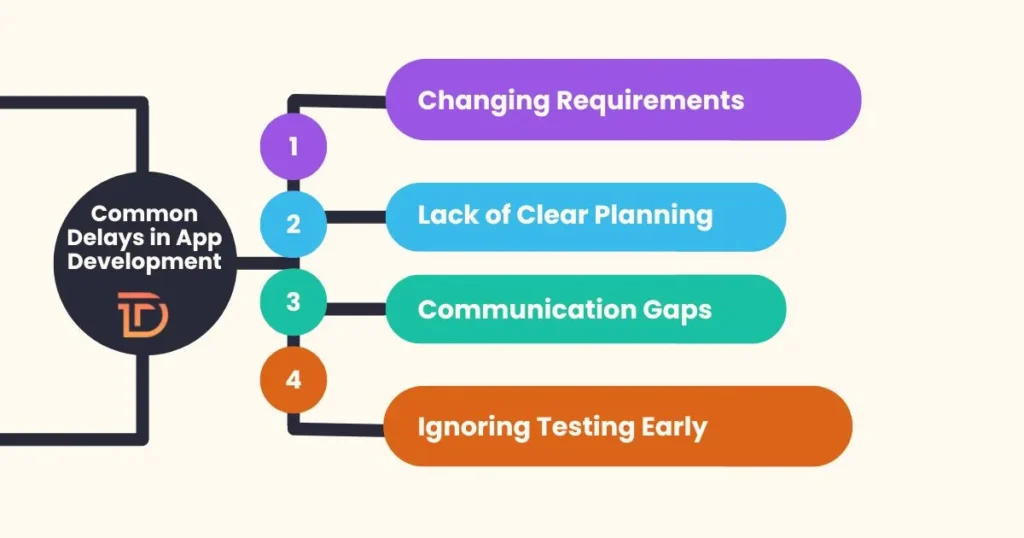
- Changing requirements
This is the most common issue. When new ideas are added continuously, the team has to redo work. This not only delays the project but also increases cost.
- Lack of clear planning
Without a roadmap, teams keep adjusting their approach. This creates confusion and slows down progress.
- Communication gaps
Misunderstandings between teams lead to errors. Fixing these errors takes additional time.
- Ignoring testing early
When testing is delayed, problems are discovered later. Fixing them at that stage takes much more effort.
How Can You Speed Up App Development Without Compromising Quality?
The idea of speed is attractive, but doing it the wrong way can cause problems. Understanding How to Speed Up App Development correctly is important.
- clear and practical plan
A well-defined plan allows the team to move forward without confusion. This reduces delays and keeps the project on track.
- Use modern tools
In 2026, development tools are more advanced and efficient. Using the right tools helps speed up coding and testing.
- Work with experienced teams
Experienced developers can solve problems faster and avoid mistakes. This improves both speed and quality.
- Focus on building a minimum version first
Launching a basic version helps you test your idea quickly. You can improve the app later based on real user feedback.
What Are the Most Important Tips for Businesses Before Starting App Development?
Before starting, following the right Tips for Businesses Before Starting can save time and effort.
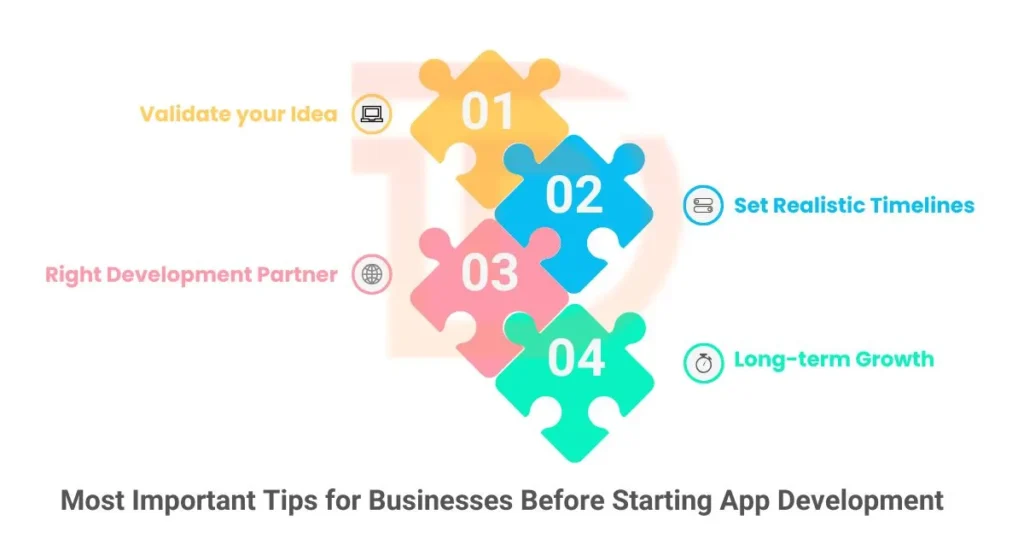
- Validate your idea
Understanding what users actually need helps avoid unnecessary features. This makes development faster and more focused.
- Set realistic timelines
Trying to build everything quickly can reduce quality. A balanced timeline ensures better results.
- Right development partner
Working with a reliable mobile app development company ensures smoother execution. This reduces delays and improves outcomes.
- Long-term growth
Your app should be able to scale as your business grows. This avoids rebuilding the system later.
How Does App Development Timeline Differ for Startups and Specific Use Cases?
The development timeline for startups is usually focused on speed and validation.
For example, a business working on CRM app development may launch with basic features first and expand later. This approach helps them enter the market faster and improve based on feedback.
Companies offering app development services follow similar strategies to balance speed and quality. At the same time, mobile app development cost plays a key role because budget and timeline are closely linked.
How Can Dreamer Technoland Help You Reduce App Development Time Without Compromising Quality?
By now, it is clear that app development time depends on more than just coding. It depends on how well the project is planned and managed. Dreamer Technoland helps businesses simplify this process by focusing on clarity, structure, and efficiency from the beginning.
- Clear planning
Instead of rushing into development, the team focuses on understanding your idea and defining requirements.
This reduces confusion and avoids delays later. - Structured development approach
A step-by-step process ensures that each stage is completed properly. This keeps the project on track without affecting quality.
- Scalable solutions
The app is built in a way that supports future expansion. This avoids rebuilding and saves time in the long run.
- Continuous support
Regular updates and improvements keep the app relevant and efficient. This helps businesses grow without technical delays.
Final Thoughts
So, how long does it take to develop an app in 2026?The answer depends on your idea, your team, and how well you plan your project. A simple app may take a few months, while a complex platform can take much longer.
The key is not just speed, but building the right product in the right way.When you understand the process and plan properly, app development becomes predictable and manageable.
FAQs
Q. How long does it take to develop an app in 2026?
A. A simple app may take 2 to 3 months, while complex apps can take 6 to 12 months depending on features.
Q. What affects app development time the most?
A. Idea clarity, feature complexity, design, and team experience are the biggest factors.
Q. Is web app development faster than mobile app development?
A.Yes, web apps are usually faster because they use a single codebase, while mobile apps require platform-specific development.
Q. How can businesses reduce development time?
A. By planning clearly, starting with a basic version, and working with experienced teams.
Q. Does cost impact app development timeline?
A. Yes, higher budgets allow larger teams to work faster, which reduces development time.