
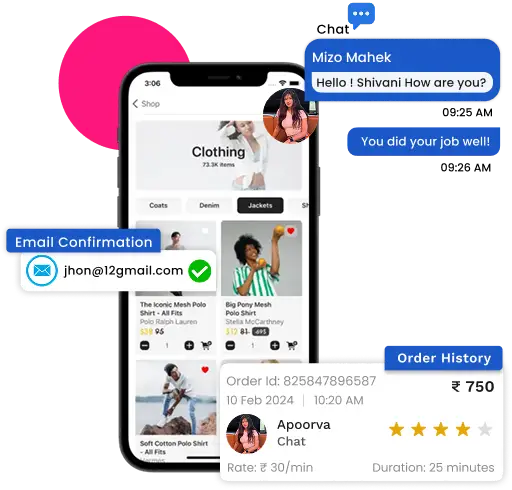
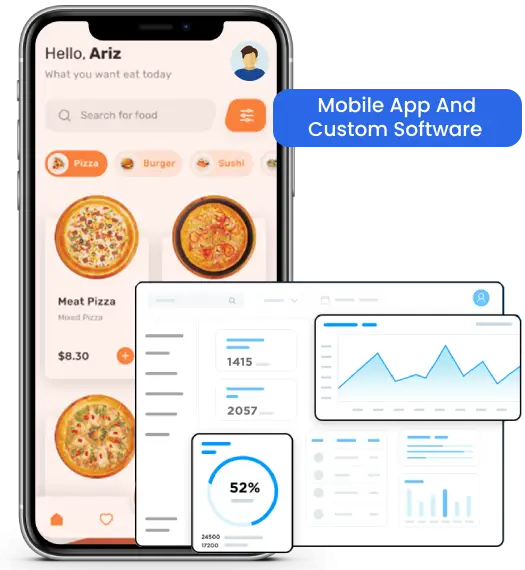

API integration in eCommerce means connecting your online store to outside systems like payment processors, shipping carriers, and inventory platforms, so they share data automatically. Without it, your team copies information between tools by hand, which slows down orders and creates errors customers can see. For most stores today, this connection has moved from a nice-to-have to a basic requirement.
According to Statista, global retail e-commerce sales are projected to cross $8.1 trillion by 2026, and most of that volume will run through stores that connect checkout, warehouse, and delivery systems without manual work. That growth creates a real window for businesses that build the right connections now, before competitors lock in faster experiences.
This blog breaks down where API integration in eCommerce pays off, where it gets complicated, and how to pick the right approach for your store. You’ll walk away knowing what to prioritize first and what to avoid.
Benefits of API integration in eCommerce
The real payoff of API integration in eCommerce shows up in numbers you can measure, not just smoother-sounding operations. When you connect your store to payment, shipping, and inventory systems through APIs, you close the gap between what customers expect and what your backend can actually deliver. API integration for eCommerce platforms turns disconnected tools into one working system, and that shift changes how fast a business can grow.
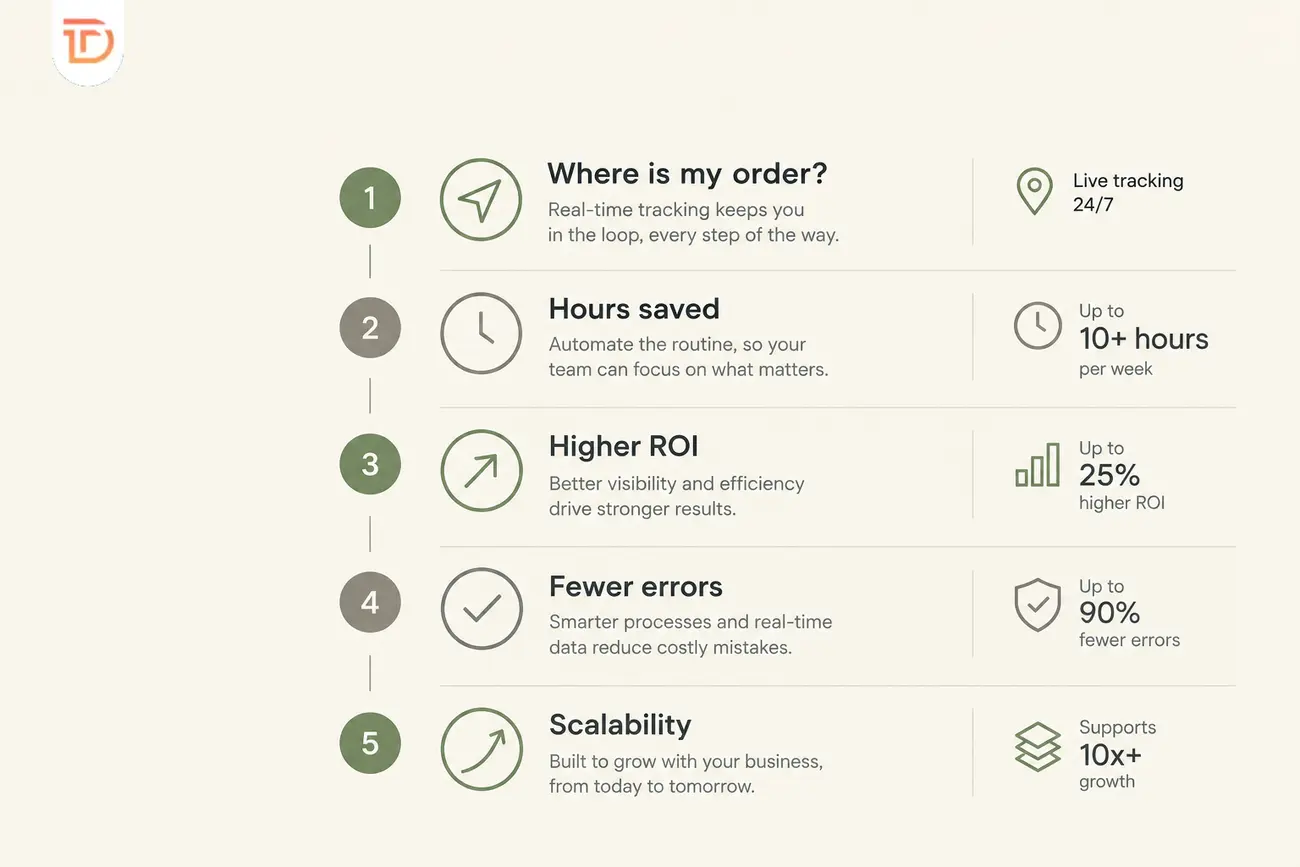
- Fewer “where is my order” tickets: Courier API integration gives customers live tracking instead of a guessing game. Real-time order tracking through courier APIs cuts “where is my order” inquiries by around 40 percent, freeing your support team to handle issues that actually need a human response.
- Hours of admin work saved every day: Manual order entry eats time your staff could spend elsewhere. Businesses processing 100 or more orders daily typically save 3 to 5 hours of administrative work once API integration takes over data entry between the store and backend systems.
- ROI that shows up fast at scale: ERP integration delivers measurable returns once a business crosses 200 to 300 orders a month or manages 500 or more SKUs. Below that volume, manual processes might hold up; above it, they start costing real money every week.
- Fewer errors that cost you sales: Manual data entry between systems invites typos, duplicate orders, and stock mismatches. Automated data flow between your store and your inventory, payment, and shipping tools removes most of that risk before it reaches the customer.
- Room to grow without adding headcount: As order volume rises, API-driven systems scale the workload automatically. You don’t need to hire more staff just to keep orders moving through the same manual steps your team used when volume was lower.
The businesses that benefit most from API integration are the ones already doing enough volume to feel the pain of manual work. If you’re processing more than 100 orders a day, every week without integration is a week of lost hours and avoidable mistakes.
How APIs Improve eCommerce Business Operations
Good eCommerce API development isn’t about adding a feature for its own sake. It’s about making systems that were never built to talk to each other work together without someone sitting in the middle, copying numbers from one screen to another. That’s the real operational shift APIs bring to an online store, and it shows up in how fast orders actually move.
- Payment processing happens without manual reconciliation: Connecting your checkout to processors like Stripe, PayPal, or Square through APIs lets transactions complete, confirm, and record themselves automatically. Nobody has to log into a dashboard and match payments to orders by hand at the end of the day.
- Inventory stays accurate across every channel: API connections between your store and your warehouse system update stock counts the moment an item sells. That stops the common and costly problem of selling something you don’t actually have left to ship.
- Shipping updates happen on their own: Linking your platform to carriers like FedEx, UPS, or DHL through APIs means tracking numbers, delivery estimates, and status changes flow straight to the customer’s inbox. Nobody on your team checks a carrier portal and forwards updates by hand.
- Customer data stays in sync with your CRM: API links between your store and tools like Salesforce keep customer records, order history, and support tickets updated in one place. Your sales and support teams work from the same information instead of five separate spreadsheets.
- Manual data entry drops to almost zero: Every connection above replaces a task someone used to do by hand. Fewer manual steps mean fewer typos, fewer missed updates, and fewer customers calling to ask why their order status hasn’t changed in days.
Operational improvements like these don’t happen because a company bought the right software. They happen because someone built the connections properly, tested them, and kept them running after launch.
Importance of API Integration for Online Stores
Online stores don’t usually lose customers at the product page anymore. They lose them at checkout, the moment payment feels slow, unfamiliar, or broken. Payment gateway API integration decides whether that moment converts into a sale or sends the shopper somewhere else entirely.
- Mobile checkout decides most of your conversion rate
Across markets like the UAE, mobile devices generate roughly 74 percent of e-commerce traffic, according to industry estimates. A store that hasn’t connected to Apple Pay, Google Pay, or Samsung Pay is asking mobile shoppers to type card numbers on a small screen, and many simply won’t bother finishing the order. This is exactly why API integration in eCommerce now sits at the center of checkout strategy, not on the edge of it. Letting customers pay the way they already pay for everything else removes one of the biggest reasons carts get abandoned.
- Buy now, pay later isn’t a side option anymore
Payment behavior has shifted away from cash-on-delivery toward digital wallets and installment options across many markets. In the UAE specifically, platforms like Tabby and Tamara now dominate the buy-now-pay-later space, and stores without that option lose shoppers who simply go shop elsewhere. Scalability matters here too: as you add new payment methods, new sales channels, and new regions, API integration lets you plug each one in without rebuilding your checkout from scratch. Stores that treat integration as optional end up rebuilding their backend every time they want to sell somewhere new.
- Retention depends on experience, not just price
Customers don’t come back to a store that felt clunky at checkout, no matter how good the price was. Fast, familiar payment options build trust, and that trust turns into repeat purchases over time. Businesses that delay this decision usually do it because switching providers feels risky, but the bigger risk is losing mobile shoppers who expect a one-tap checkout and simply don’t get one.
What Makes eCommerce API Integration Challenging?
API integration solves real problems, but getting there isn’t free of friction. Businesses that skip the planning stage run into the same issues again and again, and some of them get expensive fast.
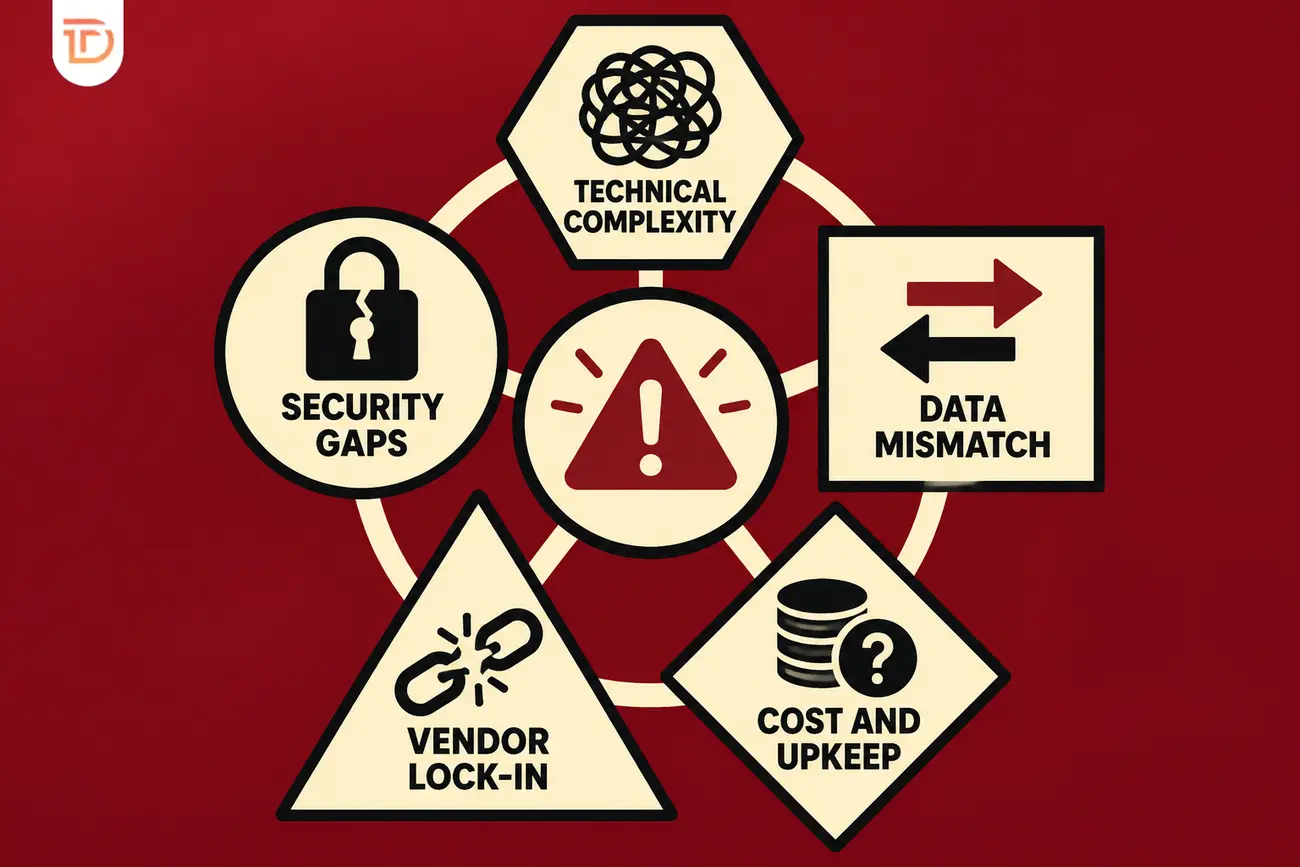
- Technical complexity between old and new systems: Many stores run on legacy platforms never built to share data with modern tools. Connecting them requires custom work, and rushing it creates fragile integrations that break during busy sales periods.
- Security gaps that put customer data at risk: Every API connection is a door into your systems. Protecting it means setting up encryption, authentication protocols like OAuth or API keys, secure gateways, and strict access control, not just a password and hope.
- Data that doesn’t match across platforms: Without careful mapping, stock counts, order statuses, or customer details can show different numbers in different systems. Inventory management API integration has to be built and tested properly, or you end up with two sources of truth that disagree.
- Getting locked into one vendor: Some integration approaches tie you tightly to a single provider’s tools and pricing structure. Switching later becomes expensive and slow, which limits your options as your business grows and changes direction.
- Cost and upkeep that outlast the launch: Building the connection is only half the job. APIs change, platforms update, and someone has to maintain the integration going forward, or it quietly breaks without anyone noticing right away.
When Australian retailer SurfStitch tackled these challenges head-on, the results showed what’s at stake: an 89 percent drop in oversold and canceled orders, a 43 percent rise in same-day shipping, and a 37 percent cut in inventory costs. That’s the gap between doing integration right and doing it halfway.
Best Practices for Successful API Integration
Good integration isn’t about picking the flashiest API on the market. It’s about following a process that catches problems before they reach your customers and cost you orders.
- Read the full documentation before you commit: Every API has quirks: rate limits, required fields, error formats that aren’t always obvious. Reviewing documentation upfront saves you from discovering limitations halfway through a build, when changing direction costs far more time and money.
- Design security into the architecture, not after launch: Build encryption, OAuth or API key authentication, and access control into the integration from the start. Bolting security on later almost always leaves gaps that attackers find before your own team does.
- Test in stages, from sandbox to live: Run the integration in a sandbox environment first, then staging, then a small slice of live traffic before a full rollout. Each stage catches different problems, and skipping one usually means finding that problem with real customer orders instead.
- Monitor and log everything after go-live: APIs fail quietly if nobody’s watching them closely. Set up logging and alerts so your team catches a broken connection within minutes, not after customers start complaining about missing orders.
- Match your platform and API standard to your actual scale: Shopify’s REST API, Magento’s REST and GraphQL APIs, BigCommerce’s REST APIs, and WooCommerce’s REST APIs and Webhooks all handle integration differently. REST works well for straightforward, system-to-system connections, while GraphQL gives you more flexibility when your data needs get complicated. Pick based on what you actually need, not what sounds more advanced on paper.
Planning each of these steps properly, rather than rushing to connect systems and fix problems later, is usually what separates a smooth API integration services project from one that drags on for months.
API Integration Tools and Platforms Comparison
Not every platform handles API integration the same way, and picking the wrong one for your current scale creates work you’ll redo within a year. Ease of use, documentation quality, and how well the API handles your transaction volume all factor into that decision.
Shopify, Magento, BigCommerce, and WooCommerce lead the field for store-level API connections in eCommerce, each with a different balance of simplicity and flexibility. Payment platforms like Tabby add a different kind of connection, one built specifically around checkout and installment flows rather than catalog or inventory data. Security matters too: most of these platforms support token-based authentication and permission scopes, which keeps third-party app access under control.
| Platform | API Type | Primary Use Case | Integration Complexity |
|---|---|---|---|
| Shopify Plus | REST API | Store-wide connections for payments, shipping, and apps | Low to moderate |
| Magento | REST and GraphQL APIs | Complex catalogs and custom data queries | Moderate to high |
| BigCommerce | REST APIs | Multi-channel selling and headless storefronts | Moderate |
| WooCommerce | REST APIs and Webhooks | WordPress-based stores needing flexible plugins | Low to moderate |
| Tabby (BNPL) | Payment API | Installment checkout for UAE and GCC shoppers | Low |
If you’re running a straightforward catalog with standard checkout needs, Shopify Plus or WooCommerce usually gets you live faster, since their REST APIs are simpler to set up and widely documented. If your catalog is large, your data needs shift often, or you’re building a custom storefront, Magento’s GraphQL option or BigCommerce’s broader API set give you more room to grow. Magento’s GraphQL layer, for example, lets you pull exactly the data fields you need in one request instead of several, which matters once your catalog runs into thousands of SKUs.
The payoff of picking the right connection shows up directly in conversion numbers. When Philippines-based payment platform Dragonpay integrated with Lazada and Shopee through APIs, merchants saw a 12 percent rise in payment approval rates and a 19 percent jump in checkout conversion. That’s the real return a well-matched API integration produces: fewer failed payments, more completed orders, from the same traffic.
How Dreamer Technoland Can Help You Develop API Integration Solutions
Picking the right systems to connect, and getting them to work together without breaking your checkout, isn’t a decision to make on a guess. One wrong integration choice can mean months of rework and a store that loses customers while you fix it.
Dreamer Technoland works specifically on connecting eCommerce platforms to the payment, inventory, and shipping systems that keep a store running day to day. The team has handled the exact problems this blog covers: mismatched inventory data, failed payment gateway connections, and legacy systems that weren’t built to talk to modern APIs in the first place.
Our developers build custom API integration solutions around your specific stack, whether that means connecting Shopify to a new payment gateway, syncing inventory across warehouses, or linking your CRM to your storefront. We don’t hand you a generic plugin and call it done; we architect the connection around how your business actually runs. If you’re planning your next project, our API integration services team can map out exactly what needs to connect and what it will take to do it properly.
The businesses winning in eCommerce right now aren’t the ones with the most features. They’re the ones whose systems actually talk to each other. Contact Dreamer Technoland today for a free API integration consultation.
FAQ Section
Q. What is API integration in eCommerce?
API integration in eCommerce connects your online store to outside systems like payment processors, shipping carriers, and inventory tools. It lets data move between them automatically, instead of your team copying information by hand between separate platforms every day.
Q. Why is API integration important for online stores?
API integration keeps checkout, inventory, and shipping accurate without manual work. Stores without it risk overselling stock, slow order processing, and missing checkout options customers expect, like digital wallets. It’s become a basic requirement, not an upgrade, for staying competitive.
Q. What are the main security risks of API integration?
The biggest risks come from weak authentication, unencrypted data, and poor access control. Proper API integration uses OAuth or API keys, secure gateways, and permission scopes to protect customer data and prevent unauthorized access to payment or inventory systems.
Q. How long does eCommerce API integration take?
Timelines vary by scope. A single payment gateway connection might take two to three weeks. Full integration across inventory, shipping, and CRM systems, especially with legacy platforms, can take two to three months including testing and staged rollout.
Q. Which eCommerce platforms have the best APIs?
Shopify, Magento, BigCommerce, and WooCommerce all offer strong, well-documented APIs. The best fit depends on your catalog size and data needs. If you’re still choosing a platform, working through eCommerce app development decisions first helps you pick the right API foundation.