


Many businesses start with simple websites or basic software tools. However, as the company grows, managing customers, payments, data, and daily tasks through separate systems becomes difficult. Teams spend too much time switching between tools, and customers often face slow or confusing experiences.
This is one reason why businesses are investing more in web applications today. According to Grand View Research, the global enterprise application market was valued at USD 320.40 billion in 2024 and is expected to reach USD 625.66 billion by 2030. This strong growth shows how businesses are moving toward smarter digital systems to improve operations and customer experience. A well-built web app helps companies manage work faster, serve customers better, and support long-term business growth from one central platform.
What Is a Web Application?
A web application is software that works through an internet browser. Users can open and use it online without downloading it like traditional software. These applications work on laptops, mobile phones, and tablets, which makes them easy to access from almost anywhere.
Many platforms people use daily are web applications. Online banking systems, shopping websites, project management tools, and customer portals are common examples. Businesses prefer web apps because they are flexible, easy to update, and simple for users to access.
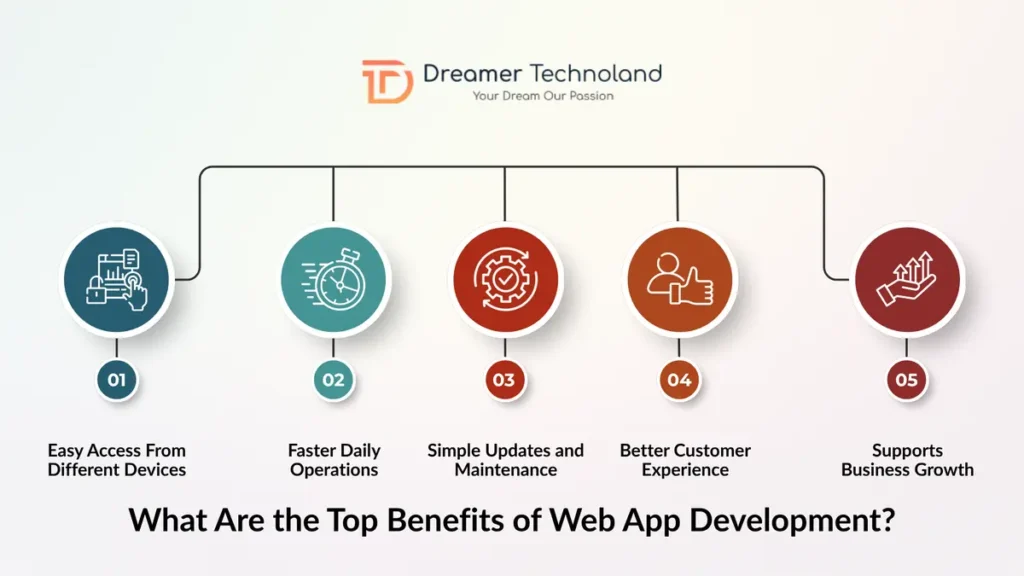
What Are the Top Benefits of Web App Development?
Businesses use web applications because they help improve daily operations, customer service, and overall efficiency. Below are some major benefits of web app development companies get after building a web application.
- Easy Access From Different Devices
A web app works through a browser, so users can access it from desktops, tablets, or smartphones without installing separate software. This makes things easier for both businesses and customers. For example, employees can manage work while traveling, and customers can place orders or access services anytime. This flexibility improves convenience and saves time for everyone.
- Faster Daily Operations
Many companies still manage tasks through emails, spreadsheets, and disconnected software tools. This often creates confusion and slows down work.A web application brings different activities into one system. Businesses can manage customer information, payments, reports, orders, and communication from one place. This reduces manual work and helps teams complete tasks more efficiently.
- Simple Updates and Maintenance
Traditional software usually requires users to install updates manually. In web applications, updates happen directly on the server, so users always access the latest version automatically. This helps businesses fix problems faster, improve security quickly, and release new features without disturbing users. It also reduces maintenance effort for the company.
- Better Customer Experience
Customers expect fast and smooth online experiences. If a platform is slow or difficult to use, many users leave quickly. A good web application improves navigation, loading speed, and overall usability. Customers can easily find information, complete actions faster, and enjoy a smoother experience. This helps businesses build trust and improve customer satisfaction.
- Supports Business Growth
As businesses grow, they need systems that can handle more users, data, and operations. Web applications make this easier because features and resources can be expanded gradually. Companies do not need to rebuild everything from the beginning every time they grow. A scalable web app supports long-term business expansion more smoothly.
What Are the Different Types of Web Applications?
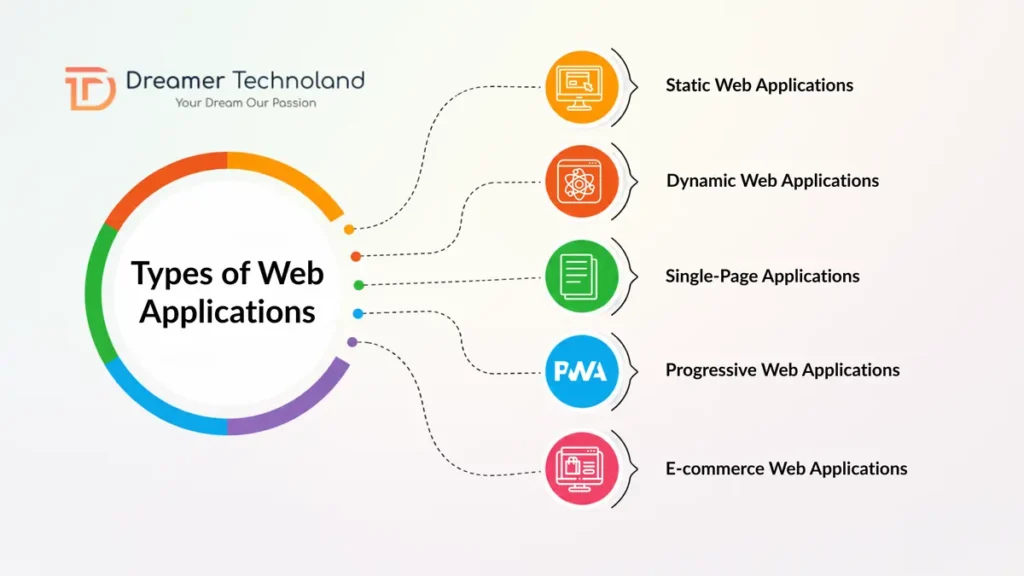
Understanding the Types of Web Applications helps businesses choose the right solution based on their goals and operational needs.
- Static Web Applications
Static web applications display fixed content and basic information. These apps are simple and usually work well for small websites that do not need regular updates or user interaction. Businesses commonly use static applications for company profiles, portfolios, and informational pages.
- Dynamic Web Applications
Dynamic web applications change content based on user activity and database information. These applications are more interactive and flexible compared to static websites. Examples include e-commerce websites, customer dashboards, social media platforms, and booking systems. Most modern businesses prefer dynamic applications because they provide better user experiences.
- Single-Page Applications
Single-page applications load content without refreshing the entire page repeatedly. This creates a smoother and faster browsing experience for users. These applications are popular because they improve navigation speed and make user interaction feel more seamless. Many modern SaaS platforms use this approach today.
- Progressive Web Applications
Progressive web applications combine the experience of websites and mobile apps. They work inside browsers while offering features commonly found in mobile applications. These web apps can support offline access, faster loading, mobile-friendly design, and push notifications. Businesses often choose them to improve mobile user experience without developing separate mobile apps.
- E-commerce Web Applications
eCommerce web applications are designed specifically for online selling and customer management. These platforms help businesses manage products, orders, payments, and customer accounts from one system. As online shopping continues growing worldwide, e-commerce web apps have become important for businesses of all sizes.
Why Are Startups Investing in Web Applications?
Startups usually work with limited budgets and smaller teams. They need systems that are affordable, flexible, and easy to manage during the early growth stage.
Web applications help startups solve many common business challenges.
- Faster Product Launch
Startups often need to launch products quickly to attract customers and compete in the market. A web app allows businesses to release services faster and improve them continuously based on customer feedback. This helps startups test ideas early and make better business decisions without long development delays.
- Lower Initial Costs
Building separate software for different devices can become expensive for startups. Web applications reduce this problem because one platform works across multiple devices and browsers. This helps businesses save money on infrastructure, maintenance, and software distribution during the early stages of growth.
- Easy Feature Expansion
A startup may begin with only a few basic features. As the business grows, new features can be added gradually according to customer needs. For example, businesses can later add payment systems, analytics, automation tools, or customer support features without rebuilding the entire platform.
How Do Enterprises Benefit From Web Applications?
Large companies handle large amounts of data, employees, customers, and daily operations. Managing everything through separate tools often creates confusion, delays, and poor communication between teams. Web applications help enterprises solve these problems by bringing important business activities into one connected system.
One major benefit is centralized data management. Many enterprises struggle when information is spread across different departments and platforms. A web application stores data in one central place, which makes it easier to manage reports, track performance, and access important information quickly. This improves decision-making and helps teams work more smoothly.
Security is another important advantage for enterprises. Large businesses often handle sensitive customer details, payment information, and internal company data. Modern web applications include strong security features such as data encryption, multi-factor authentication, secure cloud storage, and controlled user access. These protections help reduce security risks and keep important business information safe.
Web applications also improve team collaboration. Many companies have employees working from different departments, cities, or even countries. A web app allows everyone to access the same system from anywhere with internet access. This improves communication, workflow tracking, task management, and overall team coordination. It also makes remote and hybrid work much easier to manage.
What Factors Affect Web App Development Cost?
Many businesses ask about web app development cost breakdown before starting a project. However, the final cost depends on several technical and business-related factors.
Here is a simple breakdown:
| Factor | Impact on Cost |
|---|---|
| Application Complexity | More advanced features increase development time |
| Design Requirements | Custom designs require additional work |
| Third-Party Integrations | External tools increase technical complexity |
| Security Features | Strong protection systems increase development effort |
| Maintenance and Updates | Long-term support affects overall investment |
Simple web applications usually cost less, while advanced enterprise platforms require higher investment because they include more features and stronger infrastructure.
Businesses should focus on long-term value instead of choosing the cheapest option only.
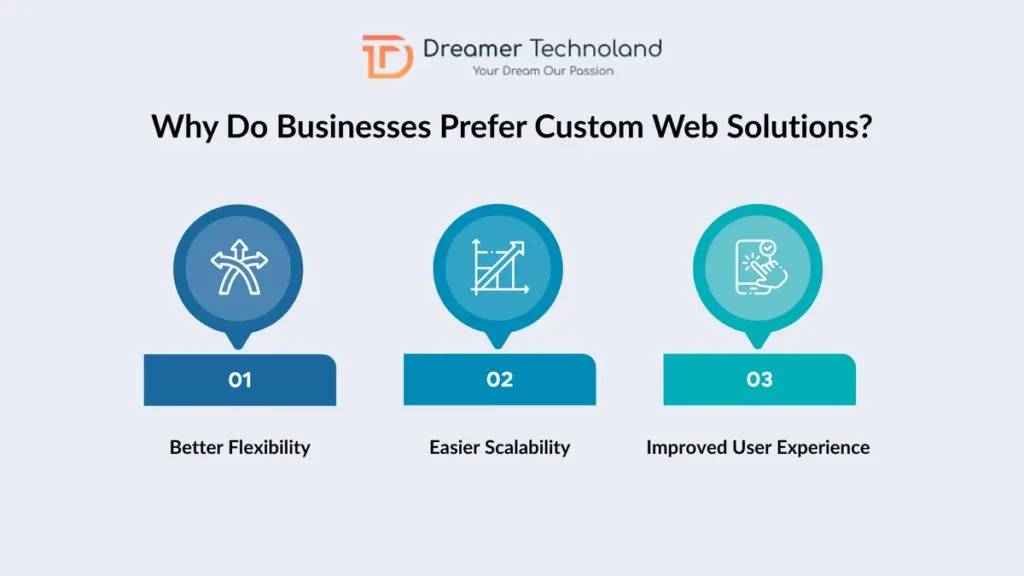
Why Do Businesses Prefer Custom Web Solutions?
Ready-made software may work for basic needs, but growing businesses often need more flexibility and control. This is why many companies choose custom web app development services.
Custom web apps are built according to specific business goals and operational requirements.
- Better Flexibility
Custom solutions allow businesses to create workflows according to their own operations instead of adjusting to generic software limitations. This improves efficiency and helps companies manage tasks more smoothly.
- Easier Scalability
As businesses grow, custom applications can grow with them. Companies can add new features whenever needed without changing the entire system. This makes long-term expansion easier and more cost-effective.
- Improved User Experience
Custom web apps give businesses more control over design and functionality. This helps companies create smoother and more personalized experiences for users. A better user experience often leads to higher customer satisfaction and stronger brand trust.
What Challenges Should Businesses Consider Before Development?
Although web applications provide many advantages, businesses should also understand possible development challenges before starting a project.
- Choosing the Right Technology
Using outdated or unsuitable technology can create future performance problems. Businesses should choose scalable and modern technologies that support long-term growth.
- Managing Security Risks
Cybersecurity threats continue to increase every year. Businesses must focus on strong security practices to protect customer and company information. Regular updates, secure hosting, and proper testing help reduce security risks significantly.
- Maintaining Performance
Adding too many unnecessary features can slow down the application and affect user experience. Businesses should focus on clean design, fast loading speed, and useful functionality instead of overcomplicating the platform.
Why Choose Dreamer Technoland for Web App Development?
Choosing the right web app development company can make a significant difference in how efficiently your business operates and grows online. At Dreamer Technoland, we focus on delivering scalable, secure, and user-friendly web applications tailored to unique business requirements. Our team combines modern technologies, agile development practices, and industry experience to build solutions that support long-term business growth.
We help businesses with:
- Custom web application development
- Responsive UI/UX design
- Scalable and high-performance architecture
- Secure and reliable web solutions
- Third-party API integrations
- Ongoing maintenance and technical support
Our approach starts with understanding your business goals, workflows, and customer expectations before development begins. This helps us create practical digital solutions that improve operational efficiency, enhance user experience, and support future scalability.
With experience across industries like healthcare, logistics, ecommerce, construction, and real estate, Dreamer Technoland delivers web applications designed to solve real business challenges while maintaining performance, flexibility, and security.
Conclusion
Web applications have become an important part of modern business growth. They help companies manage operations, improve customer experience, and support daily work more efficiently.The Benefits of Web App Development include better accessibility, smoother business operations, easier scalability, and improved collaboration. Whether it is a startup launching a new platform or a large enterprise managing complex systems, web applications help businesses work faster and more effectively.
At the same time, choosing the right development strategy and technology partner is equally important for long-term success. Businesses that invest in smart and user-friendly web solutions are better prepared for future growth and changing customer expectations.
FAQs
Q. What is web app development?
A. Web app development is the process of building applications that work through internet browsers instead of requiring installation on devices.
Q. Why are web applications important for businesses?
A. Web applications help businesses manage customers, operations, communication, and daily tasks more efficiently from one platform.
Q.What are the main Types of Web Applications?
A. The main types include static web apps, dynamic web apps, single-page applications, progressive web apps, and eCommerce web applications.
Q. How much time does it take to build a web application?
A. Development time depends on the complexity, features, and requirements of the project.
Q. Are custom web applications better than ready-made software?
A. Custom web applications provide better flexibility, scalability, and control because they are designed according to specific business needs.