



The Macquarie Wrap platform Australia advisers use every day has become the operating system behind modern financial advice. It pulls custody, reporting, and portfolio administration into one place, replacing the patchwork of spreadsheets and legacy tools many practices relied on for years. According to Macquarie’s own platform updates, shared through LinkedIn, the Wrap platform now builds in AI and ongoing adviser feedback loops, helping financial advisers deepen client relationships rather than just process paperwork. That shift signals a real business opportunity: advisers who adapt their workflows around this kind of Custom software development gain time back for actual advice work, not admin. This blog walks through what makes the platform work, how advisers and investors use it day to day, what adoption actually costs, and where firms get implementation wrong. You’ll finish with a clear picture of whether your practice is ready to move.
How Macquarie Wrap Platform Is Transforming Wealth Management in Australia
Wealth management in Australia runs through a small number of major wrap platforms, and the Macquarie Wrap platform Australia advisers depend on sits right at the center of that shift. It’s no longer just a custody and reporting tool. It’s becoming the layer where advice, data, and client communication meet, which changes how a practice is run day to day.
From Admin Tool to Advice Engine
For years, wrap platforms existed mainly to hold assets and spit out statements. That’s changing fast. Macquarie has been rebuilding its Wrap platform around AI and design principles pulled directly from adviser feedback, not just back-office requirements. The goal isn’t flashier dashboards. It’s cutting the hours advisers spend on admin so they can spend more time on actual client conversations. This matters because advice businesses don’t scale by hiring more paraplanners. They scale by removing friction from the systems those paraplanners use every day. When a platform automates reporting, flags portfolio drift, and surfaces client insights without manual digging, the adviser’s whole week looks different.
Why Advisers Are Paying Attention Now
Practices that ignore this shift risk falling behind competitors who already run leaner operations. A platform built around real adviser workflows, not just compliance boxes, changes how fast a firm can grow its book of clients. That’s the real transformation happening inside Australian wealth management right now, and it’s why so many advisory groups are rethinking their platform strategy this year. The practices gaining the most ground aren’t the ones with the biggest books. They’re the ones who’ve cut administrative drag out of their daily workflow using the platform’s built-in automation.
What Makes the Macquarie Wrap Platform Australia’s Leading Integrated Wealth Solution
Plenty of platforms promise integration. Few actually deliver it in a way advisers notice on a Tuesday afternoon when they’re trying to pull a client report before a meeting. This section gets into what actually separates a leading platform from one that just checks boxes on a feature list. A solid macquarie wrap platform overview australia advisers would recognize starts with one simple fact: everything sits in one system. Custody, managed accounts, term deposits, insurance, and direct equities all live under the same roof. That matters because fragmented data across five systems means five places for errors to creep in, and five places where a client’s real position gets misrepresented.
Built for Scale, Not Just Size
Scalability isn’t about handling more clients. It’s about handling more complexity without adding more staff hours per client. A practice managing 200 clients and a practice managing 2,000 should both be able to run reporting, rebalancing, and compliance checks without the system buckling under volume. That’s the test most platforms fail quietly, and most advisers only notice once their book has already grown past what their systems can handle gracefully.
Designed Around the Adviser, Not the Back Office
The strongest differentiator is adviser-centric design. Instead of forcing advisers to adapt to rigid back-office logic, the platform works around real advice conversations, proposal generation, and client review cycles. This is a direct break from how older platforms were built, and it’s the reason advisers describe the newer Wrap experience as noticeably faster to work in day to day. Integration without adviser-first design is just consolidation. The platforms winning adviser loyalty right now are the ones built around how advice actually gets delivered, not just where data gets stored.
Core Features and Technology Stack Behind Macquarie Wrap Platform
Most advisers never see what’s running under the hood, and that’s actually the point. A platform built right makes its technology invisible, letting the adviser focus on the client instead of the system. But understanding what’s happening underneath still matters when you’re deciding whether this platform fits your practice. 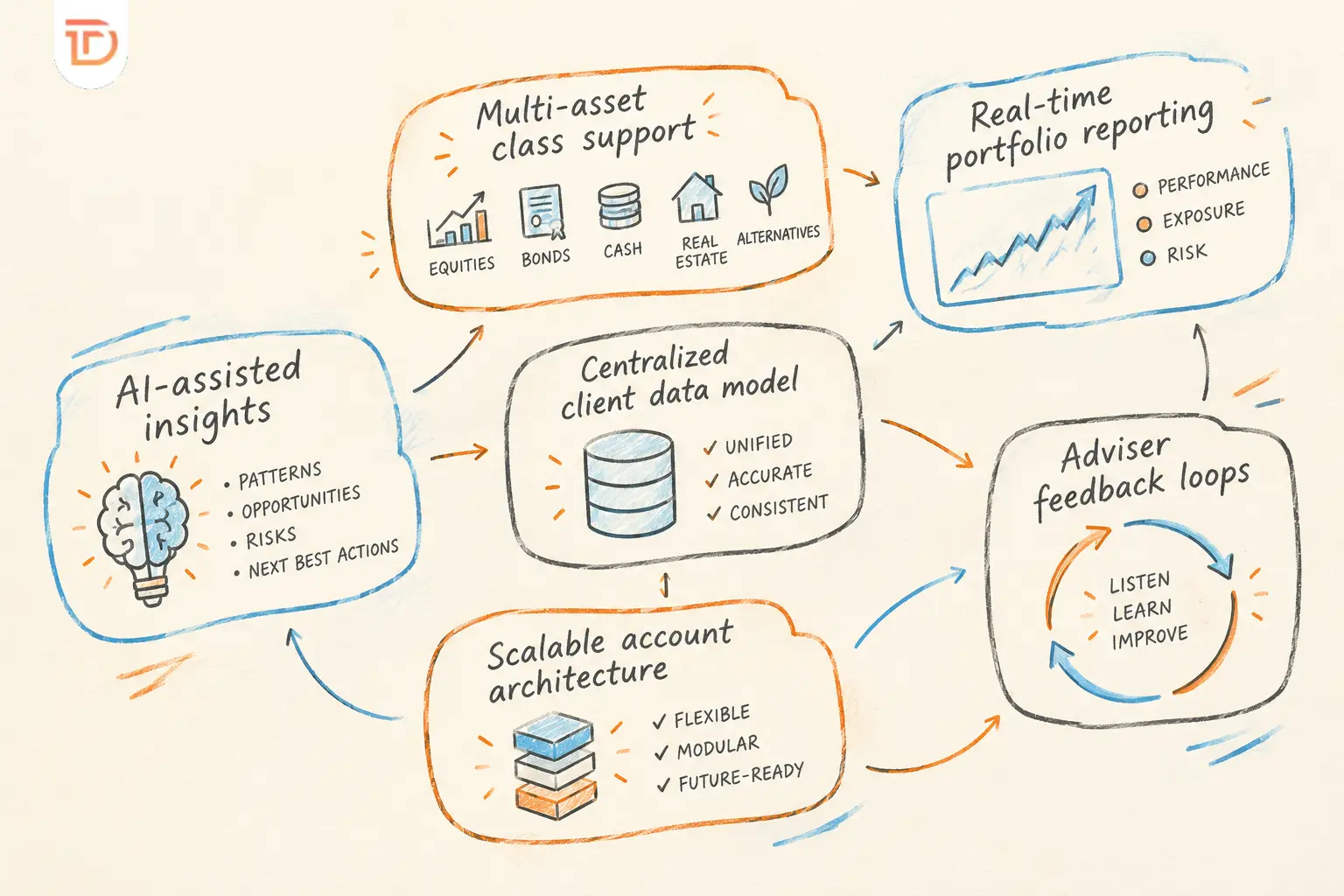 Good wealth management software development isn’t about adding more screens. It’s about making data move accurately between custody, reporting, and client-facing tools without manual re-entry. Here’s what sits behind the Macquarie Wrap experience:
- Multi-asset class support: Handles equities, managed funds, term deposits, and insurance products inside one ledger
- Real-time portfolio reporting: Updates valuations and performance data without overnight batch delays• AI-assisted insights: Surfaces portfolio drift, cash flow gaps, and rebalancing triggers automatically
- Centralized client data model: Keeps one version of client records across advice, admin, and compliance functions
- Scalable account architecture: Supports practices growing from a few hundred to several thousand client accounts
- Adviser feedback loops: Feeds real usage data back into product updates, shaping future platform releases
What ties all this together is a data architecture built to stay consistent even as the practice scales up. A system that reports accurately for 50 accounts but slows down or errors out at 5,000 isn’t actually built for growth, it’s built for a demo. The real test of any platform’s tech stack isn’t the feature list, it’s whether reporting stays accurate and fast once your client count triples.</em
How Advisors and Investors Navigate the Macquarie Wrap Platform Ecosystem
Two very different people use this platform every day, and they need completely different things from it. An adviser wants speed and clarity across dozens of client books. An investor wants a clear picture of their own money, nothing more. Getting both right at once is harder than it sounds, which is why platform design matters so much here.
- Adviser reporting and proposal tools. Advisers use the platform to generate client reports, run scenario comparisons, and build advice proposals without jumping between separate systems. This alone cuts hours off a typical advice review cycle each week.
- Client relationship management. Built-in CRM functions track client meetings, follow-ups, and document history, keeping compliance records tidy without separate manual logs.
- Portfolio construction and rebalancing. Advisers model allocation changes and execute rebalancing directly inside the platform, with changes reflected in reporting almost immediately.
- Investor portfolio access. Clients log in through their own portal to check holdings, performance, and transaction history whenever they want, without calling their adviser for basic updates.
- Communication and document sharing. Statements, tax documents, and advice updates get delivered through the same portal, cutting down on paper and email back-and-forth.
Any macquarie wrap platform provider australia offers today is judged on how well it serves both sides of this relationship, not just the adviser’s efficiency or the investor’s convenience alone. The platforms that get this balance wrong end up with happy advisers and frustrated clients, or the reverse, and neither outcome keeps a practice growing.
Implementation Strategy: Getting Your Practice Ready for Macquarie Wrap Platform
Rolling out a new platform without a plan is how practices end up with messy client data, confused staff, and a go-live date that keeps slipping. Treat this like a real project with phases, not a weekend migration task handed to whoever’s free. 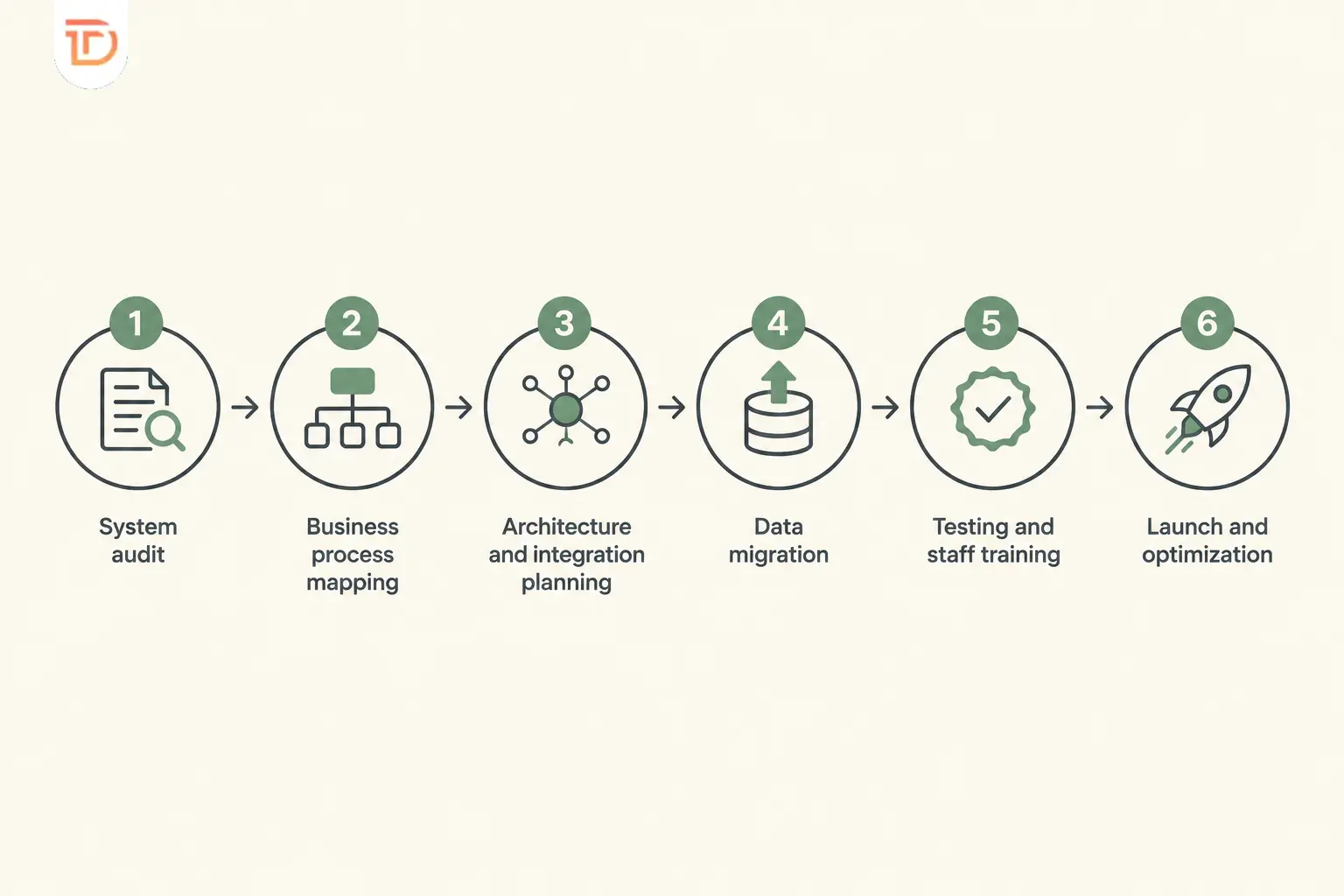
- System audit. Map every existing tool your practice currently uses, from CRM to reporting software to compliance logs, before touching anything new. Skipping this step is the single biggest reason migrations run over budget.
- Business process mapping. Document how your team actually handles client onboarding, reviews, and reporting today, so you know exactly what needs to carry over cleanly.
- Architecture and integration planning. Decide how the Wrap platform will connect with your existing tech stack, including which systems need direct api integration and which can be retired entirely.
- Data migration and configuration. Move client records, portfolio histories, and compliance documentation across carefully, then configure reporting templates and user permissions to match your practice’s structure.
- Testing and staff training. Run the new system in parallel with your old process for a few weeks, testing reports and client access before fully switching over. Train every staff member who’ll touch the platform, not just senior advisers.
- Launch and ongoing optimization. Go live with a clear rollback plan in case something breaks, then review usage data monthly for the first quarter to catch friction early.
A rushed implementation almost always costs more in the long run than a slower, properly staged one. Practices that skip the audit and mapping phases end up re-doing data migration work twice.
Common Adoption Challenges with Macquarie Wrap Platform and How to Overcome Them
Every practice that’s switched platforms has a story about what went wrong in the first three months. Most of these problems aren’t about the platform itself, they’re about how the rollout gets handled internally. Knowing these patterns ahead of time saves you from repeating them. The biggest friction point usually shows up around macquarie wrap platform api integration work, where firms underestimate how much custom connection work their legacy tools actually need. Staff resistance comes a close second, especially among advisers who’ve used the same reporting process for a decade and don’t see why it should change.
| Challenge | Root Cause | Solution |
|---|---|---|
| Staff resistance to new workflows | Advisers comfortable with old reporting habits | Run hands-on training sessions, not just documentation handoffs |
| Legacy system friction | Old CRM or reporting tools don’t connect cleanly | Plan custom API integration work early, before migration starts |
| Incomplete data migration | Rushed timelines skip validation steps | Build in a parallel-run testing period before full cutover |
| Compliance record gaps | Historical documentation stored across multiple systems | Centralize records during migration, not after go-live |
| Timeline pressure from leadership | Unrealistic go-live dates set before scoping is done | Scope the audit phase properly before committing to a date |
None of these problems are unusual, and none of them are reasons to avoid the switch. They’re reasons to plan the rollout properly instead of treating it as a quick system swap.
Compliance, Security and Regulatory Standards in Macquarie Wrap Platform Operations
Regulatory exposure is the one area where cutting corners during implementation actually puts your AFS license at risk, not just your client relationships. Treat this section as the non-negotiable part of any rollout plan.
- Privacy Act obligations: APP 1.7 requires clear disclosure of automated decision-making processes, effective from 10 December 2026, meaning any AI-driven reporting or insights need documented transparency now
- APRA CPS 230 operational resilience: Requires firms to demonstrate they can maintain critical operations through system disruptions, including platform outages.
- APRA CPS 234 information security: Mandates strong cyber security controls around client data stored and processed through the platform.
- SOCI Act critical infrastructure obligations: Applies where platform operations intersect with critical financial infrastructure classifications.
- AFS license reporting duties: Advisers remain personally accountable for accurate reporting and advice records regardless of which platform generates them.
Compliance isn’t something you bolt on after go-live. Build these checks into your implementation plan from the audit phase onward, because retrofitting compliance after launch costs far more time than building it in from the start. Firms that treat these standards as a checklist exercise usually miss the parts that matter most under audit, particularly around automated decision disclosure. Getting ahead of the 2026 disclosure requirement now, rather than scrambling later, keeps your practice clear of avoidable regulatory risk.Cost Structure and ROI Considerations for Macquarie Wrap Platform Users
Cost conversations around platform adoption tend to focus only on the subscription fee, which misses most of the actual spend. The real cost sits in implementation, integration, and training, and that’s where budgets usually blow out if nobody planned for it upfront. Integration work alone can range widely depending on how tangled your existing systems are. A simple, point-to-point connection between the Wrap platform and a single CRM tool costs far less than an enterprise program that has to untangle years of legacy software. Understanding Fintech app development cost patterns before you commit to a rollout budget saves you from nasty surprises six weeks into the project.
Cost Component Typical Range (AUD) Notes Simple point-to-point integration 70,000 to 150,000 Single system connection, minimal legacy complexity Mid-complexity integration 150,000 to 350,000 Multiple systems, moderate data migration Enterprise-level integration 350,000 to 700,000+ Legacy systems, heavy custom development work Staff training and change management Varies by firm size Ongoing cost beyond initial rollout ROI usually shows up within the first year through reduced admin hours and faster client reporting cycles, but only if the integration work was scoped properly at the start. Firms that under-invest in the integration phase often end up paying for a second round of fixes later, which erases most of the early savings.
How Dreamer Technoland Can Help You Build Custom Integrations for Macquarie Wrap Platform
Connecting the Macquarie Wrap platform with your firm’s existing CRM, proposal tools, or legacy reporting software isn’t a simple plug-and-play job. Most practices discover this the hard way, mid-migration, when data stops flowing cleanly between systems. Dreamer Technoland works specifically on building the custom connections firms need between wealth platforms and the other software running their practice. Our team’s depth sits in api integration work for financial services, not generic app builds, which means we understand the data sensitivity and compliance weight this kind of work carries. We build custom API connections between the Wrap platform and your CRM, automate data workflows so client records stay consistent across systems, and harden every integration against the security standards Australian financial firms are held to. Whether you need Financial technology solutions built around your specific advice workflow or a full Custom software development project to replace legacy reporting tools, we scope it around your practice, not a generic template. If you’re also weighing client-facing app options, our breakdown of Mobile App Development Cost in Australia is worth a look before you set your budget. Contact Dreamer Technoland today for a free integration planning session.
FAQ Section
Q. What is the Macquarie Wrap platform and how does it differ from other wrap platforms in Australia?
It’s an integrated wealth management system combining custody, reporting, and advice tools in one platform. It differs through adviser-first design, AI-assisted insights, and continuous feedback-driven updates, rather than treating advisers as an afterthought to back-office administration.
Q. How much does it cost to implement Macquarie Wrap platform?
Implementation costs vary widely based on integration complexity, ranging from roughly AUD 70,000 for simple connections to AUD 700,000 or more for enterprise-level rollouts involving legacy systems and heavy custom development work.
Q. Is the Macquarie Wrap platform compliant with Australian financial regulations?
Yes, but compliance responsibility stays with the advice firm. Practices must still meet Privacy Act, APRA CPS 230/234, and AFS license obligations, including the 2026 automated decision-making disclosure requirement under APP 1.7.
Q. How long does it take to implement Macquarie Wrap platform?
Timelines depend on practice size and legacy system complexity. Simple migrations with minimal integration can take a few weeks, while enterprise rollouts involving multiple systems and heavy data migration often run several months.
Q. Can Macquarie Wrap platform integrate with legacy advisory software?
Yes, through custom API integration work. Legacy systems often require tailored connections rather than off-the-shelf links, which is why firms typically bring in specialist integration partners during the planning and architecture phase.